How to Use the Hero’s Journey for Sequels
Table of Contents Show
With a special focus on Act One of Uncharted 4
Does your book have series potential? If so, be prepared for some intensive plotting.
If crafting a single book isn’t hard enough—threading together rising action, compelling character development, and resonant conflicts between protagonist and antagonist—a series multiplies this difficulty exponentially. Unless you’re writing a series where the characters don’t significantly change from book to book, as is the case in some children’s fiction (i.e., Hardy Boys, Toad and Frog), you will need to consider the arcs for each book as well as how those individual arcs build the arc of the series as a whole.
How are your characters taking what they learned in the previous book into the next one?
How do they face conflict now?
What are their relationships like?
The list of questions to think about is long. However, if you’re wondering where to start when it comes to plotting a book series or if you’re struggling with a sequel, consider using the Hero’s Journey.
Looking at Act One of Uncharted 4: A Thief’s End
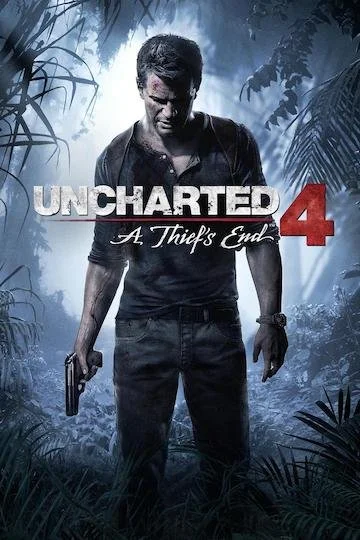
Previously, we walked through Uncharted 3: Drake’s Deception as an example of how the Hero’s Journey creates a compelling narrative by uniting themes, character development, and plot. In this article, we’re returning to the Uncharted series by Naughty Dog to apply the Hero’s Journey to Uncharted 4: A Thief’s End.
This time, we’re going to examine how Uncharted 4 fails the stages in Act One of the Hero’s Journey, investigating the impact on narrative and the disruption of continuity with the rest of the series. In short, we’re going to talk about why Uncharted 4 simply doesn’t work as a sequel. But more importantly, we’re going to share how using principles adapted from the Hero’s Journey in your series can ensure satisfying installments.
Why just Act One?
It might sound strange to camp out in the first five stages of the Hero’s Journey. However, when it comes to writing a sequel, the premise is often where the story fails to grab the reader. We’ll walk through each stage of Act One and demonstrate what’s working in Uncharted 4 and what could have been strengthened in terms of making it a successful sequel.
What are the stages of the Hero’s Journey?
Our analysis will briefly share the stages of Act One, but if you missed our previous article and want more information on the expectations of each stage and what they can do when they’re working well together, be sure to check it out.
A somewhat brief summary of Uncharted 4: A Thief’s End
Before we get too far into our analysis, we’ll lay out a basic summary of the beginning of Uncharted 4 so you can grasp the basics of what we’re looking at. Those of you who are familiar with the game can skip through this part or keep reading for a refresher if it’s been a while.
Uncharted 4: A Thief’s End
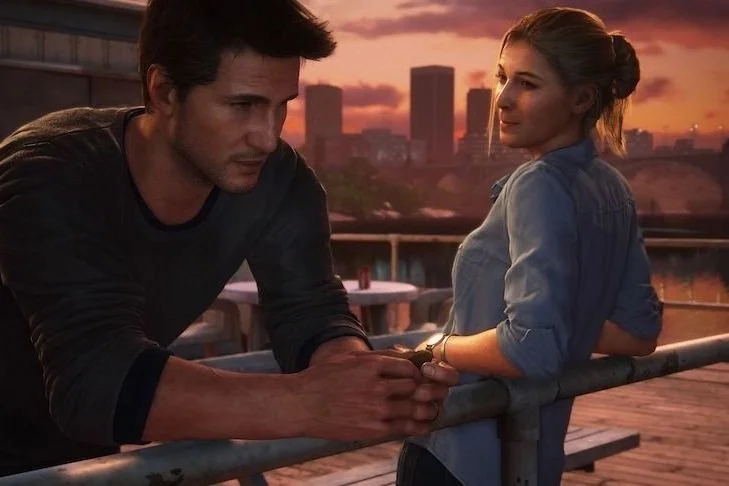
This installment is the final chapter for Nathan Drake, an adventurous treasure hunter who’s encountered more than his fair share of strange and wild things in his travels. We catch up to Nathan several years after the events of Uncharted 3—he’s put away his maps and guns and is now doing legitimate work for a salvage company while his wife, Elena, works as a journalist. He’s wistful about adventure but dedicated to holding up his end of the bargain they made after their last adventure. However, his resolve is tested when the brother he thought long dead, Sam, walks back into his life.
Sam’s backstory
Many years ago, Sam and Nathan were hired by Rafe Adler, a rich businessman turned treasure hunter, to track down the lost plunder of Captain Henry Avery, a pirate whose 1695 heist earned him notoriety and fame. Sam and Nathan infiltrated a Panamanian jail to find a clue to the treasure. Unfortunately, the prison warden turned on them, and Rafe killed him. In the ensuing frantic escape, Sam was shot by the guards and presumed dead.
Now he’s back and begging Nathan for help. He’s in serious jelly with a South American drug lord who was his cellmate in Panama, a ruthless man who only helped Sam escape with a promise that he’d find Avery’s treasure. The trouble is, Sam’s out of leads.
Expanding the in-world universe
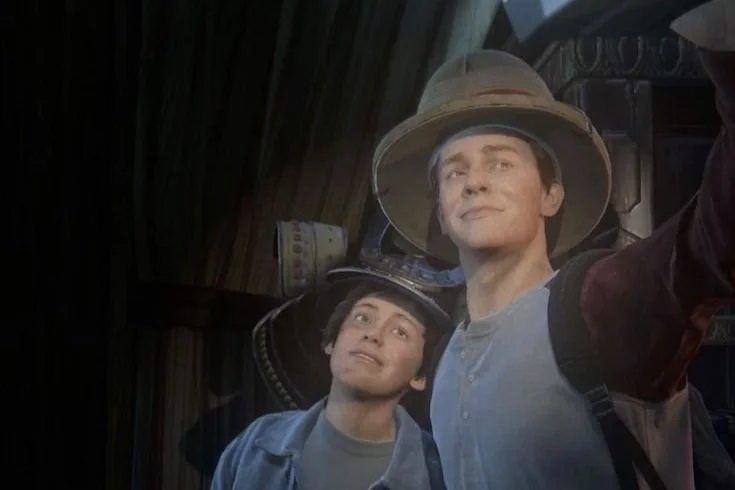
This story adds a lot of backstory to Nathan as a character. We learn more about his growing up in an orphanage in Boston, the mother who inspired a love of history and adventure in her sons, and the roguish older brother he looked up to.
Sam Drake wasn’t a part of the series before Uncharted 4, and his sudden existence opens some gaping holes in Nathan’s backstory, including the fact that he never told Elena he had a brother (her frustration over that is mirrored by many long-time fans). The narrative attempts to patch these holes, but a long-lost brother is a difficult sell in the fourth installment of a series, and Act One has a lot of hard work to do to make it feel realistic.

Captain Avery and the pirate paradise of Libertalia
Nathan drops everything to help his brother, which sets him off on a worldwide adventure chasing Captain Avery’s trail. To make this possible, he lies to Elena, saying he’s off on a salvage job. Hot on their heels is Rafe, who’s picked up the trail again as well, and they’re racing each other to the next clue. But Rafe plays by his own rules, hiring his own private army to blast his way through any obstacle, including Nathan and the others if necessary. He wants the fame of finding Avery’s treasure himself.
As Nathan and the others gather more clues, they uncover a centuries’ old pirate society created by Avery and another captain, Thomas Tew, who united several other famous pirates to create the rumored utopia of Libertalia. This installment offers the same globe-trotting adventure, stunning visuals, and clever historical puzzles as its predecessors that keep Nathan on his toes. There are a lot of good things worth talking about in the rest of the game, but since we’re focusing only on Act One, we’ll move into our analysis.
Applying the Hero’s Journey to Act One
Now that we’ve got the basic beginning, we can now compare the narrative against the stages of the Hero’s Journey to see what’s working and what’s not. We’ll move through each stage to examine what should be happening there and how unmet expectations lead to a weaker story, not only for Uncharted 4 but for the series as a whole. We’ll also discuss important principles to take away for your own work in progress.
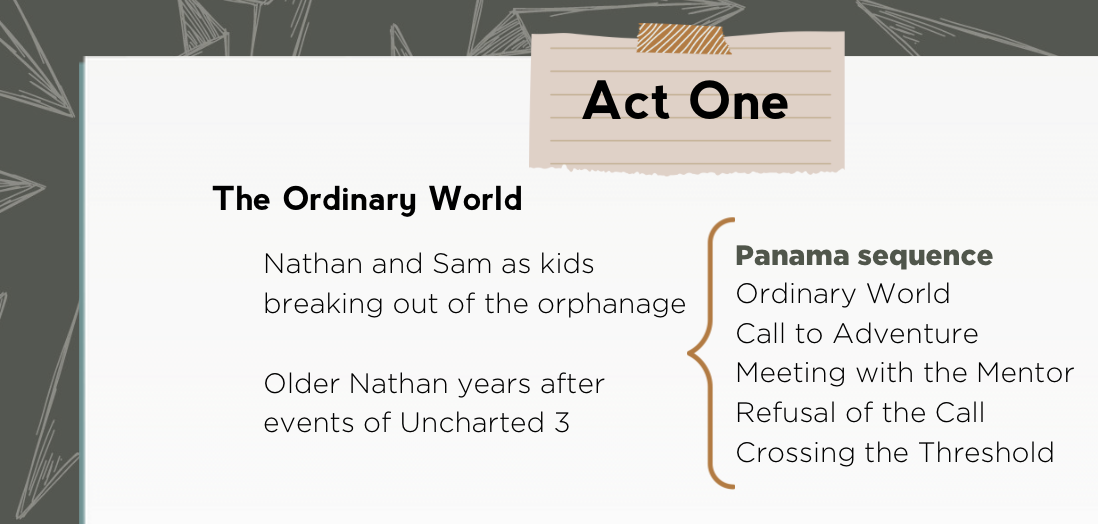
The Ordinary World
We see the hero’s everyday life and the seeds of conflict for this character.
Principle 1: Don’t reverse your protagonist’s character development.
Uncharted 4 begins with a flashforward to Sam and Nathan in a boat, trying to outrun mercenaries during a storm. Soon, Nathan is thrown overboard and falls unconscious, which is a transition to a flashback that follows the young Drake brothers as Sam breaks Nathan out of the orphanage he’s living in. We won’t return to the chase scene for some time, so it’s disqualified as the Ordinary World and set firmly in prologue territory.
In the flashback of the Drakes as boys, we see that Nathan longs to join his brother on his adventures and have the same freedom to come and go. This sets up a sense that the need for adventure is our protagonist’s conflict. But we’re still not really in the Ordinary World yet for this story.
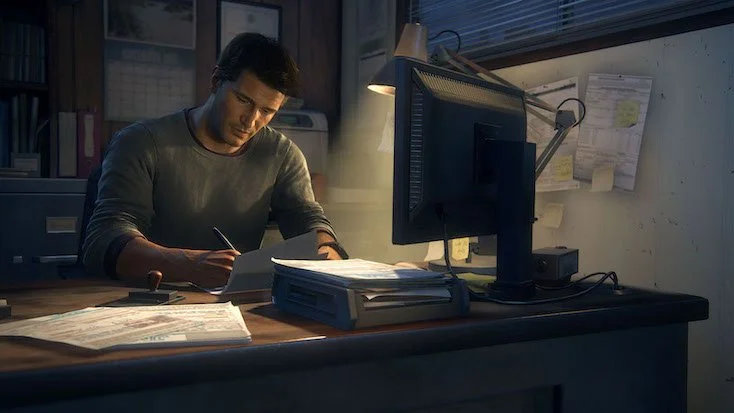
When we finally catch up to Nathan in the narrative present after this flashback (and yet another flashback, which we’ll talk about later), we learn that he’s longing for the adventures he used to have. However, while it’s understandable that Nathan might miss the action and discovery, giving us a tie to that younger self, we know that he’s older and wiser now. He’s seen things, including his brother dying in front of him. He also sees the value of the promise he made with Elena and the benefits of the life they share now that they’re not living dangerously. We know that his real conflict can’t be wanting adventure because it’s resolved as soon as Sam shows up. Sam’s problem promises adventure, and Nathan says yes right away. So what’s the real conflict?
The fallacy of “one last ride”
From a series perspective, the idea of “one last ride” is almost too tempting to resist. Nathan’s older now; of course he misses the adventure. The story occasionally frames his treasure hunting like an addiction, a theme that was confirmed by one of the head writers. There’s certainly evidence for this—he lies to Elena to go treasure hunting, he pushes Sully away when he tries to call him out on it, and so on. These parts, however, feel stiff and forced. It doesn’t make sense for Nathan to act like this because we already watched him grow through having to decide between treasure and people in Uncharted 3, the culmination of his growth from his cocky, inexperienced beginnings. All that growth naturally leads to where we meet him in Uncharted 4—on the straight and narrow and determined to stay there.
Uncharted 4 reverses Nathan’s character growth from the previous game so that he can face the same conflict again and learn the same lesson.
Revamping the Ordinary World to enhance conflict
Readers (just like story-focused gamers) will feel cheated or disappointed if the next installment of a series covers the same ground that the previous story developed—particularly if the previous installment did it wonderfully well. Series offer rich opportunities for telling new stories with loved characters, so be careful of retreading familiar and safe territory. But remember that series are often held together by thematic resonance between books, not necessarily starting over with completely new problems, so by looking at Nathan’s previous conflict, we can see a much more compelling possibility for the Ordinary World/core conflict.
Remember that in Uncharted 3, the young Nathan we meet is a direct corollary to the older Nathan who’s still trying to figure out who he is, who he can trust and, by extension, who his family is. Essentially, despite the gap in time, both young and old Nathan in that game have the same conflict (the same Ordinary World), and they’re both discovering that their drive to find treasure comes with a personal cost.
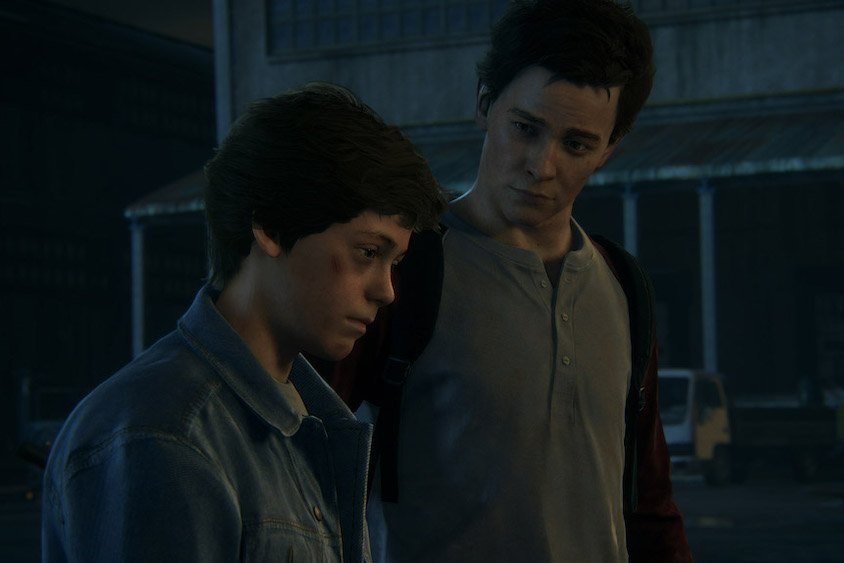
With this in mind, let’s look back at Uncharted 4’s opening. We see Nathan looks up to Sam despite his shady jobs and often leaving him on his own. Nathan himself is getting into fights, though Sam tells him to shrug off what the other kids say about their family. He’ll do anything to be with Sam, following his brother over the world’s most dangerous obstacle course over the rooftops to get out, but when he mentions them running away together, Sam shuts him down. With these factors in mind, we’re starting to get a better idea of what this Ordinary World should be.
In both the early flashback and the narrative present, Sam’s arrival challenges the person Nathan’s become in his brother’s absence, and he has to navigate that struggle in both storylines. Sam is the element that adds tension to Nathan’s relationships, damages the life he’s built, and eventually puts him and his loved ones in danger. Essentially, Nathan’s conflict is Sam.
A detour in Panama
For the sake of flow, I’ve put the flashback of Nathan as a kid and the opening of the narrative present side by side. However, there’s another flashback—the story of Nathan, Sam, and Rafe in the Panamanian prison—that appears after the earliest flashback and before the main action kicks off. Even if the other two storylines are united, it’s not clear where this fits. It even starts looking like another Act One:
Ordinary World: Nathan and Sam palling around on adventures, their main conflict being the inherent setbacks of treasure hunting and a boss who appreciates the monetary value of their findings a lot more than their historical value.
Call to Adventure: There’s a clue to Avery’s treasure in the ruins of a tower on the prison grounds. It’s a dangerous climb for Nathan.
Meeting of the Mentor: As the Avery expert, Sam provides most of the information to interpret the clues they find.
Refusal of the Call: Nathan is fearful of the physical danger of the tower and perhaps of the warden wanting a cut.
Crossing the Threshold: Rafe kills the warden, and in the escape, Sam is killed. Nathan’s forced to confront what he’ll do without his brother.
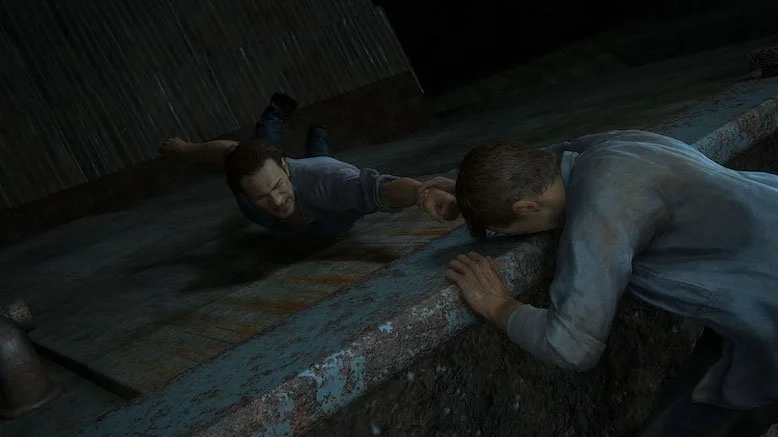
This detour only provides backstory, and these stages don’t fit inside the overarching story of Uncharted 4, either thematically or structurally. Yes, this shows that Nathan still looks up to Sam and how devastated he is when he’s killed. However, most of his character development up until now was a result of getting close to someone and almost losing them (Elena in U2; Sully in U3). Now this flashback shows us that Nathan already lost the most important person in the world to him before we met him in U1, and this raises a lot of questions.
Why did he keep going without Sam? Perhaps even more than Sully, Sam seems to be the one who led Nathan down this road and into trouble. Without his influence, why did Nathan keep going? Why didn’t Sully try to talk him out of pursuing this life after it happened, like how he confronted Nathan in U3 when things started to get dangerous?
Side note: Using flashbacks strategically
If you develop a flashback too fully, it will take on more weight and sap strength from the main storyline. It’s especially important to make sure that flashbacks are contributing thematically to the narrative present and not simply filling in information for the reader.
Time jumps are tricky at best. If there’s too much going on right at the beginning with multiple storylines and threads, readers will start feeling overwhelmed or confused, especially if they’re trying to fit what they know from previous installments into the new timeline. Raising too many questions at this point can begin to work against your reader’s need to know.
The Call to Adventure
Internal or external pressure propels the hero towards action or change.
Principle 2: Make sure the motivating external pressure connects to an internal pressure for change that’s consistent with past development.
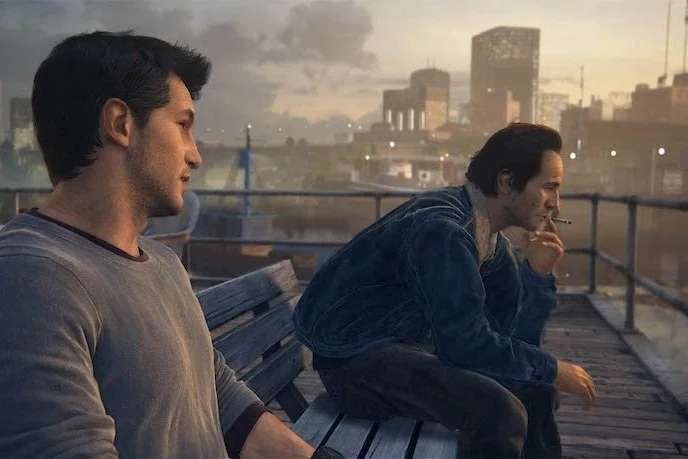
In the narrative present, the Call to Adventure is almost literal: Sam asks for Nathan’s help to find Avery’s treasure in order to save his life. This external pressure is effective because it directly challenges Nathan’s resolve to not get involved with this kind of thing anymore. However, this Call is more tied to the conflict of wanting adventure than digging down into the more weighty conflict of Sam. The fact that it’s Avery’s treasure is emphasized—a chance to finally solve the mystery that they dreamed about as kids. Our hero is being propelled toward action, but he needs to be propelled towards change, too, and this Call doesn’t offer it.
We also get bogged down in this stage due to the fact that there’s a call to adventure in the flashback when Sam gets Nathan out of the orphanage. This duplicate call might have a stronger echo if our protagonist’s conflict was really the longing for one more quest, for treasure. The call to adventure in the flashback is also a bit of a tease because we don’t get the full memory (and find out its importance) until much later in the story.
Revamping the Call for character development
In a series, your character has been Called at least once before. They might be more eager this time rather than be reluctant as a result of the growth they experienced in the previous installment. However, it’s still important to use this stage to keep building tension and character. It’s easy to allow an external conflict be the reason the character is pushed back into the fray, but it’s more rewarding when an internal struggle and need to change are involved.
Consider how you can incorporate what your protagonist has learned up until this point. How have previous events shaped your protagonist to handle these shifts? How can that experience and growth make the conflict of this installment more interesting or nuanced? How can you avoid slipping into clichés that might potentially distance your reader? Long-lost brother back from the dead is high up there. Are you skimming past this stage too quickly?
Exploring nuance and character development in the Call
Nathan’s past development has brought him to a place where family is his priority. Discovering lost cities was what brought them together and forged strong bonds, but he walked away from that when he realized his drive could destroy everything he truly valued.
Internally, Nathan should be wrestling with having to choose between the family he had and the family he’s built. Now that he knows that people are the most valuable treasure, he’s forced to make a choice between the ones he loves, and either choice will dramatically change his relationships. Picking up after so many years, Nathan’s relationship with Sam should already be problematic and difficult. They simply can’t the same brothers they once were. Sam wants it to be like it was before, just the two of them against the world, and Nathan’s forced to reconcile that he can’t ignore Sam’s problem at the same time he knows he has another family to think of.
As we mentioned before, Sam Drake wasn’t a part of the series before Uncharted 4. It would have been a natural course of action to simply allow that narrative decision add as much friction as possible, leaning into its awkwardness and tension to ramp up conflict rather than trying to explain it away. Nathan can still struggle with wanting the thrill of the hunt—he’ll always be that person—but his perspective on it has changed. The only thing that should get Nathan out of retirement is if the brother he once looked up to was in deep trouble. But now he has to grapple with the fact that a lot has changed since he last saw Sam. The questions he’s asking here at the beginning would be stronger if they were “How can I decide between my brother and the family I’ve built without him? After everything I’ve been through, am I the expert, or is Sam?” rather than “Should I do this? Will Elena find out?”
Meeting with the Mentor
The hero encounters a person who prepares them for the journey by training, equipping, or giving advice.
Principle 3: Even a character who has grown a lot during their adventures needs a reference point.
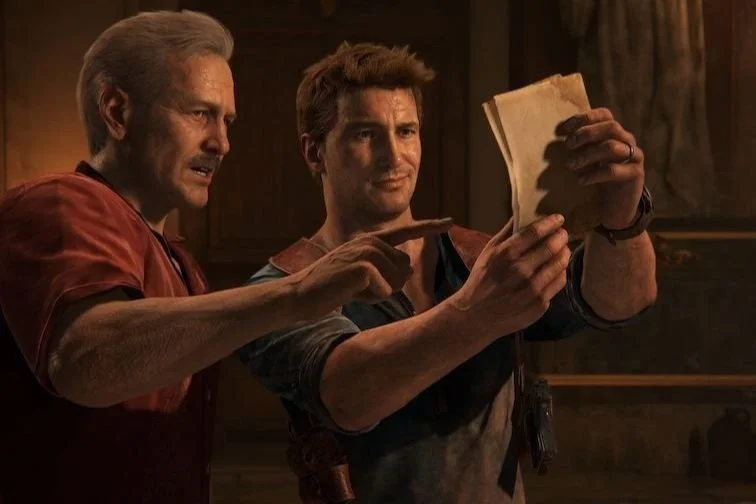
This stage breaks down almost immediately. There is no clear mentor, though the story seems to be pushing Sam into that role. He’s the older brother, he’s always been the Avery expert, and even in the gameplay, Sam is the one teaching the player how to use specific mechanics like the grappling hook. He’s often telling Nathan what to do. However, it’s hard to forget that even at this point in the story, we’ve seen Sam getting Nathan into all kinds of trouble, including dragging him into a potential feud with a South American drug lord. If that wasn’t enough, between the two brothers, Nathan definitely has more experience than his brother—especially in the realm of strange and exotic treasures lost to history (three games’ worth now). While he makes sense as the mentor in the flashbacks, Sam simply makes no sense in the mentor role in the present action. He cannot mentor the man Nathan is now, which is another reason Nathan’s character development must be reversed for this story to work.
Revamping the mentor
This stage could benefit from a strong mentor role, preferably filled by Sully, who’s held the role for so long. Their reunion could further Nathan’s conflict as he has to face the fact that he’s going back on his word when he reaches out for the less-than-legit resources and connections Sully has. As it stands, we don’t even get to see how that conversation went down. There’s an understandable distance between them since Nathan’s gone straight, but if Elena doesn’t get to be the one saying this is a bad idea, Sully should be saying it.
Sully is a valuable reference point since he’s known Nathan since he was a kid, and he’s also largely responsible for the life that Nathan has lived. Sully, too, changed significantly in the last game, and while he seems to believe it’s too late for him to change, he wholeheartedly supports Nathan moving on to a normal life. It would make sense for Sully to stick close after Sam shows up because he can see through Sam in ways Nathan can’t. He wants to watch out for his old friend. Sully and Nathan working together again could also demonstrate how much Nathan has grown as he becomes a pseudo mentor to Sam, something Sully could note. Naturally, it would be difficult for Nathan to take that role with his brother and for Sam to accept it, adding even more tension to their relationship.
Refusal of the Call
The hero is uncertain, reluctant, or fearful.
Principle 4: The Refusal should be internally motivated. The Refusal is an inner reflection of the conflict, the problem that will be resolved.
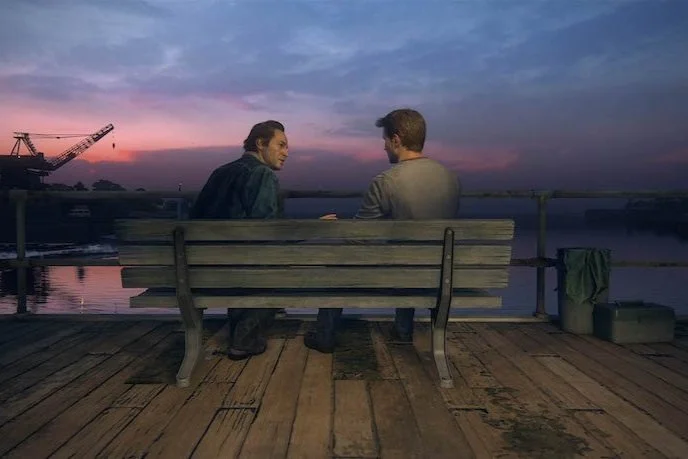
The narrative sidesteps the present once more for a sequence that shows how Sam escaped from the Panamanian prison and how he ended up in trouble with the drug lord. After sharing this, Sam asks Nathan for his help to track down Avery’s treasure. However, when the time comes for the decision, Nathan’s refusal is brief and almost feels stiff as he tries to offer alternatives. We’ve seen him be resolute up until this point, but he gives in a bit too quickly. Based on the previous games, we’ve seen that he’s nearly lost everything he cared about a few times. That should give him plenty of pause.
Not all heroes are reluctant, but based on what we’ve seen up until now, Nathan should be in this camp. After all, he’s been making the choice to put people before treasure for years now. Earlier, Elena, sensing his restlessness, encourages Nathan to take a less than legal salvage job in Malaysia, but he pushes back, refusing to consider it if they didn’t have permits. We have a lot of evidence that he’s committed to staying legit despite others trying to change his mind. However, in the scene in which the Call is given, we have little doubt that Nathan is going to say yes—this is good news for the action to kick off but bad news for compelling character development.
Revamping the Refusal
The Refusal is a great opportunity for your character to define their growth so far, whether they mindfully take an inventory or simply reflect. What have they gained? What have they lost? In a series, your protagonist has been on the brink before, and the more they’ve done it, the better understanding they have of what can happen if they say yes. The Refusal should always stem from the conflict you’re building because change is painful, even if it’s necessary. Your character knows they need to change, but it shouldn’t be easy.
Nathan’s restlessness indicates he’s not settled in himself yet. He’s still got some figuring out to do, perhaps a rebalancing of his priorities, and this is highlighted when Sam returns. However, the Call shouldn’t be a choice between throwing away everything he’s built in his life for one last ride or eking out a mundane existence. Rather, these options should represent the stakes, why he needs to change—neither one is really him. Nathan’s been playing it safe, maybe too safe. He needs to find a way to stay the man he’s committed to be while still pursuing what he loves. However, his hesitation should be a sense that that Sam will try and tell him who he is.
Crossing the Threshold
The hero leaves the Ordinary World.
Principle 5: Leaving the Ordinary World should represent a point of no return, not just the start of the action.
In the narrative present, Nathan quickly agrees to help Sam. He crosses the threshold when he immediately calls Elena, saying the permits for the Malaysia job have come through and setting up the lie that will allow him to traipse around the world without suspicion. This definitely is a point of no return as Nathan can’t take back that lie without having to reveal everything to Elena, but this stage is complicated by the fact that this is not the same Nathan we left at the end of the previous game. This is Nathan when we first met him Uncharted 1: Drake’s Fortune—an ambitious rogue and definitely a bit of a con man trying to keep Elena at arm’s length.
Because this crossing of the threshold doesn’t resonate with Nathan’s conflict, it feels like we’re breezing past all the consequences in order to get to the fun parts. If this really is a story about addiction, this haste makes sense. However, if we’re really talking about Nathan’s conflict with Sam and who he’s going to be now that this part of his past has returned, we need a much stronger sense of what it means for Nathan to choose to go on this adventure.
Reflections on using the Hero’s Journey
Here ends Act One! As you can see, there are many important considerations to work through to build a solid and captivating beginning, not to mention the beginning of a sequel. To sum up, here are the main principles to keep in mind for a series:
Principle 1: Don’t reverse your protagonist’s character development.
Principle 2: Make sure the motivating external pressure connects to an internal pressure for change that’s consistent with past development.
Principle 3: Even a character who has grown a lot during their adventures needs a reference point.
Principle 4: The Refusal should be internally motivated. The Refusal is an inner reflection of the conflict, the problem that will be resolved.
Principle 5: Leaving the Ordinary World should represent a point of no return, not just the start of the action.
Ready for a set of professional eyes on your manuscript?
If you’re looking for big-picture feedback on what’s working and not working in your manuscript, a developmental edit or a manuscript assessment can help you make powerful and effective revisions. We’d love to hear more about your project!
Images from the game are property of Naughty Dog.