
Revising Star Wars Jedi: Fallen Order | Developing Theme
Table of Contents Show
We call these nonexistent next drafts.
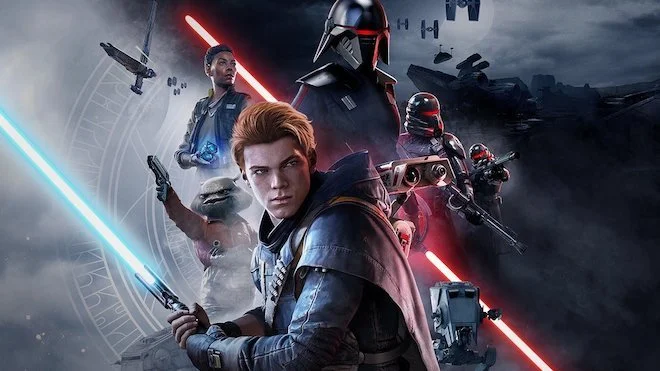
Today, we’re looking into developing theme to enhance the storytelling in Star Wars Jedi: Fallen Order.
It might (or might not) surprise you that, even though we’re daily up to our elbows in story, the two editors at Ground Crew take enormous delight in talking shop about the stories we watch, read, or play in our spare time. My sister and I have been doing this unconscious rearranging or reconsidering of books, film, and games our whole lives, which should have been a dead giveaway we’d be editors someday. There is some serious satisfaction in taking something completely beyond the scope of editing—it’s out there in the world, published, wrapped with a bow, delivered—and reworking it into a hypothetical “next draft.”
It’s not about the published version being “wrong” or “incomplete,” and the approach that we take for a revision certainly isn’t the only way that a revision could go. It’s about finding out what the story did well and amplifying that so it becomes truer to itself. Most of the time that means bringing already present elements to the forefront and making them shine brighter. Sometimes it means putting in a few missing pieces or teasing out parts that could be doing more work.
This is what we do as developmental editors, so maybe it’s practice for the real thing, but on the whole, it’s just great fun. Revision is where a writer dives deep to discover what their story is about, where they find their voice. It’s definitely work, but it’s also an unbounded space where a writer can try anything—follow rabbit trails into secret glades, strip off old panels and build a completely new starship, capture a completely new voice to tell the story.
For this nonexistent next draft, we’ll be illustrating how to use theme as a developmental edit technique, how choosing a core theme can help tighten a plot and deepen emotional resonance in a story.
Revision is the space of possibilities, and we hope that these nonexistent “next drafts” inspire you to take another look at your story with the freedom to play and create. You may be surprised there is still so much left to explore.
revision: to see again
The latest installment in the Star Wars Jedi video game series officially launches today, so it’s a perfect time to take a look at the first game, Jedi: Fallen Order. A quick note before we go too much further: video games wrestle a whole host of beasts that novel writers don’t have to tame, not to mention the production process can be a nightmare of changing technology, bureaucracy, time, and budgets (for a great insider’s look at the industry, we highly recommend Jason Schreier’s Blood, Sweat, and Pixels). We’ll be looking at the story only for our deep-dive. That said, let’s get to the fun stuff.
A brief synopsis
(for those who haven’t played it or need a refresher)
This game follows Cal Kestis, a former Jedi padawan whose master died helping him escape from clone troopers during infamous Order 66. He’s been living on Braca ever since, surviving as a ship breaker in a wasteland of star destroyers. That backstory unfolds over time, however, as Cal’s memories are just as shattered as his connection to the Force. After barely escaping Order 66, Cal can use some of his abilities, but between the trauma of his past and hiding what he is to stay under the Empire’s radar, he’s pretty weak. Yet when Cal uses the Force to save a fellow scrapper, he accidentally reveals his identity. The Inquisitors are summoned, the friend he just saved is killed trying to protect him, and Cal is forced to go on the run. He’s rescued by Cere, a former Jedi who severed her connection to the Force after Order 66 and the Purge, and Greez, the captain of the ship who, for a while, has to have enough of a sense of humor for everyone on board.

They’ve rescued Cal because they need him—Cere needs a Jedi with a working Force connection to find what her old master, Eno Cordova, was traversing the galaxy in search of. Cal needs somewhere to be, so he agrees. Ultimately, they’re hunting for a holocron containing a list of Force-sensitive children that Cordova hid in an ancient temple. In a scavenger hunt across multiple planets, Cal follows Cordova’s footsteps with the help of a droid he left behind as a guide, BD-1 (the most adorable Star Wars droid, by my reckoning). Cal has a unique ability to sense “Force echoes,” sensations, memories, or voices connected to a certain place, and with this ability and his growing lightsaber skills (which are pretty great for someone who hasn’t done anything with a lightsaber for five years), he’ll track down the holocron and fend off the Empire, which is also keen to find it.
Developing theme
Fallen Order, in many ways, could be considered YA, so we’ll approach this “edit” like it’s a YA novel. You’ll find that we talk a lot about theme around here, and that’s because as writers and editors, we believe that it’s the most essential story craft element—and definitely indispensable in YA. Fallen Order has a lot going for it, but for the greatest emotional impact and player satisfaction beyond a smooth game with entertaining combat, it needed a clear focus on its theme. We’ll walk you through what this could have looked like for this story.
Like a developing photograph, theme usually becomes clearer as you spend more time in a story.
Many stories discover what they’re really about later on as the writer has had the time to explore ideas and sink deeper into the world, and this is true for Fallen Order as well. When Cal arrives on Dathomir, he’s warned about hallucinations caused by the sheer presence of the dark side of the Force on the planet, though for a long time, you only see acid-spitting spiders and zombie Nightsisters that are deadly real. When you get to the temple, there’s a meditation point, which serve as the save points in the game. After you settle into it with the habit of the hundred save points before, you’re treated to a flash of light instead of the usual meditation menu.
Suddenly, you’re with bitty padawan Cal on a starship. This isn’t new—before this, the game uses flashbacks to insert tiny tutorials whenever Cal restores part of his Force connection and learns a new ability. The player learns the ability as Cal learned it when he was a youngling.
This time, however, something is different. Cal is walking the halls, talking to the clone troopers. One reminds him of a rematch they have coming up. Another clone gives Cal a high-five before he goes into the training room. We know something is going to happen in this memory because the pattern has been broken (remember that, writers, as a foreshadowing technique). Cal is on his way to training, not already there with his master as in the other flashbacks. Then you hear the clones saying that they’re going to be leaving Braca. From this, we’re learning that the flashbacks we’ve been seeing were daily life for Cal, practically growing up on a ship of war even though he’s supposed to be training as a peacekeeper.
This scene is a perfect example of an already existing element that could be drawn out more: duality.
This duality is one of the most compelling pieces of the game. Cal was raised during the Clone Wars, meaning he didn’t know much else, and he certainly didn’t have a good sense of what the Jedi were supposed to be before he was thrown into a whole different life on the run. He’s a Jedi, but he’s not a Jedi. When Order 66 comes through, the world he trained for and thought he was going to join doesn’t exist anymore.
In fact, Cal’s job for years becomes taking apart starships like the one he used to live on, a heartbreaking reality that he reveals to BD-1 while they’re crawling through the ruins of a Venator on another planet. He tells the droid that when he was ship breaking, it felt like going through the bones of his old life. Crawling around in the wreck, the player feels that duality. It was home, and now it’s broken beyond repair. That future died before he could be a part of it. This theme is developed even further if the player follows a trail of Force echoes through the debris, tracking the memory of a Jedi master and padawan who survived the crash, only to be hunted down by the clones they served with. The Jedi master urged her padawan to escape, but he wouldn’t leave. Later, Cal finds the place where the padawan buried his master before dying of his own wounds not too long after. This was a powerful bit of storytelling as it is. However, it could have struck a much louder chord if the story had been focused on a theme for Cal’s character arc because the parallel between this story from the past and Cal’s own would be undeniable.
And what theme naturally presents itself? Guilt.
Let’s go back to the unusual flashback from Dathomir. We eventually see the inevitable moment when Cal and his master realize the clones have turned on them. They’re separated, and while Cal slips through the maintenance tunnels, he’s listening to the clones who, just minutes ago, were old friends. Suddenly, he’s just the “little one,” the other Jedi they’re hunting. Getting caught in a few encounters with the clones, Cal expresses his distress at having to fight them, though for greater impact, I would have had Cal call them by their names, a unique way the Jedi intentionally humanized the clones (as we see in the show The Clone Wars). This is a prime example of a way a writer can “make it worse” in a good way—the betrayal is a heavier gut-punch if these clones are friends, not just faceless enemies.
Cal stumbles through the escape, and his master, true to form, gives him a hard time all along, especially when he drops his lightsaber and makes himself even more a liability. Cal’s master is badly wounded protecting him, and it’s only after this that Cal is able to summon enough Force energy to freeze the clones so they can finally board the escape shuttle. His master gives Cal his lightsaber as he dies, and it’s clear Cal completely blames himself for everything as the escape pod hurtles toward Braca.
So you can see, guilt as a theme is already so strong in the story. But guilt alone isn’t a compelling storyline, especially in Cal’s case where it isn’t possible to restore what’s been lost. So where can the resolution come from? The emotional core of the story lies in Cal’s problem, but guilt is only a surface issue. What’s beneath that?
For the next “draft” of this story, I would suggest that Cal’s sense of identity is the core problem.
And now I’ll walk you through how addressing just this one essential story craft element, theme, creates powerful impact and produce a more satisfying ending.
Cal’s broken connection to the Force represents his internal struggle, but for emotional resonance, we need to know what the connection to the Force means to him—that is, beyond the ability to now wall-run and push spiders off cliffs. If this were a novel I was doing a developmental edit on, I’d suggest that Cal’s identity is what’s at stake and is the true theme of the story. His guilt stems from his conception of what a Jedi is and does. He was raised and trained for a specific purpose, with ideals of responsibility to the galaxy and the concept of a world of good, order, and justice. Being a Jedi was going to be his identity and his purpose, but after Order 66, he could no longer be a Jedi. And even if the Order still existed, a real Jedi would have saved his master. His broken connection with the Force is now linked inextricably with his childhood trauma, a lack of belief in himself, and loneliness.
Let’s take a look at how keeping Cal’s identity at the forefront—as the primary theme—shapes the story and deepens it in wonderful ways.
Introduction / Setting the stage
When we meet Cal, he’s at war with himself. He’s in hiding, but it’d be easier for him to disappear if he threw away his lightsaber. Perhaps we even see him seriously consider it for the four-hundred-and-sixth time. He clearly can’t let go of his sense of what a Jedi should do because he risks his life to save his friend, using the Force when he knows it could mean the end of everything.
But in his mind, he’s not a Jedi, so when Cere and Greez ask for his help, he should keep his distance at first. He’ll doubt he can help, the death of his master right at the front of his mind. He can’t save anyone, but he also can’t trust others because how he was betrayed, and this is something that Cere would definitely understand. It isn’t until he starts traveling with BD-1 that this begins to change.
BD, now with him every moment of the day, would be the one to start breaking down his barriers because it’s the first time in ages that Cal isn’t alone.
Along with this change, I would have emphasized that BD-1 is unique, an irreplaceable map that had to be protected, as well as the one who would determine whether or not the person who found him was worthy of taking on the challenge. If we learned later that BD had chosen Cal on purpose (not just the first person to blow off the dust and turn him on), then that would be a further indication that Cal really does have what it takes, even if he doesn’t believe it yet.
Cal would initially tell Cere he doesn’t want another master, letting her know that he thinks that life is behind him. When he finally realizes that Cere can still teach him something (which would need to be developed beyond the “Let’s talk later, Cal” we get far too often, which unfortunately starts sounding like “Shut up, Cal” over time), he’d be acknowledging he still has stuff to learn and that he needs a master if he’s going to do anything more than survive.
Leading to the Crisis
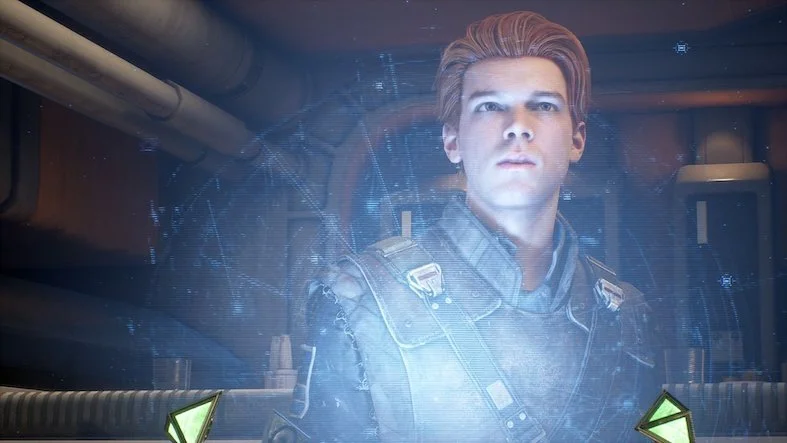
As Cal encounters the Inquisitors, his sense of identity would be painfully at stake. If Cal doesn’t think he’s a real Jedi, then any insults about his abilities and failures would sting (and enemies in video games are always throwing shade during fights anyway). He’s getting abilities back, but does that really make him a Jedi? But he’s starting to feel that perhaps protecting the other Force-sensitive kids could be something he can do. This quest touches on his guilt (not being able to save his master) but also on an internal wound of his own—he was not protected as child. So we’d see more connections between Cere and Cal. They both harbor powerful guilt, and with all the difficulty they face on this journey, Cere would begin to realize how much she’s asked of him. This would also enhance Cere’s small arc because she sees that her work as a master isn’t done. Cal needs her to step up just as she needs him to step up to find these tombs, to fight back the Empire, and to be the Jedi he’s supposed to be. She needs to heal her connection to the Force just like he does.
Cal’s role at this point is still largely functional, and that plays into the duality we talked about earlier.
Cere simply needs a Force-sensitive person to find these ancient tombs, and here he is, digging through the remnants of civilizations thousands of years later. Who he is to them? No one—mostly a tomb raider, even if he is a Jedi. He’s a ghost in the wreck of a starship. He’s picking up the sense memories of tragedies he can’t prevent or even do anything about because they happened years ago, if not centuries. When the clones turn, he’s just a kid.
Back to Dathomir/Dark night of the soul
While on Dathomir, Cal has a vision of his master. As always, his master is cruel and harsh to him—a reflection of how deeply Cal sees his failure. His master shames and insults him, and then he crushes the lightsaber. Since the lightsaber is Cal’s last link to his old life, this is a devastating blow. With its destruction, Cal’s lost. Any sense he had of being a Jedi of any kind is gone. It feels like the end of his story. This is the crisis.
But Cere, in a rare act of performing the role of a master and overcoming some of her pain, tells Cal that he needs to build his own lightsaber. That would transform the part of the game that takes place on Ilum, where Cal goes to find a new kyber crystal. Returning to the ruined temple reminds him even more of what he’s lost and how everything is broken now, and he almost doesn’t go through with it.
He’s not convinced simply having a lightsaber will change anything, much less make him a real Jedi.
At one point, the earthquakes cause a cave-in. Cal, thinking he’s the expendable one, pushes BD to safety but is unable to keep himself from falling into icy water below. In the few seconds he has before passing out, he’s thinking this is the end. He’s not a Jedi. He’s let everyone down. Everything that people sacrificed for him was in vain. That’s when he sees the vision of his younger self reaching down, saying, “Trust me.”
This moment from the original takes on enormous resonance if we understand what Cal’s younger self represents—who he thought he’d be as a Jedi, that goodness, order, and justice. That self and confidence of purpose. In this moment, he sees that the kid he was then is still who he is now, and he can trust that what he knew then, what he was training to do, is what he should do. That life, that person, didn’t die in the Purge. Choosing to follow that vision and pull himself out of the water is a determination to recover that sense of self.
Then it gets darker
He drags himself over to the crystal with great effort, but as soon as he has it in his hands, it breaks in two. Broken like everything else. Cal is wrecked by this. Here he is, freezing to death, trapped, alone, and his mission is a failure. He is a failure. In the hero’s journey, you would call this the “inmost cave.”
That’s when BD would find him, having gone back to contact Cere as soon as the cave started to collapse. BD can reach him while Cere digs him out—Cal’s not really alone. Not anymore. To keep Cal awake, BD shows him the recording that reveals he voluntarily had his memory erased for the person who would be following Cordova. It would also tell Cal that BD chose him specifically for the mission. Cal blacks out as Cere makes her way through.
When Cal wakes up, they’re on the run from pursuing Empire ships. This is where I would have put some of the download of feelings between Cal and Cere, starting with a revelation that he’s been holding on to the crystal shards so tightly they’ve cut his palm. He would tell her what happened and what he thinks this means (he’s not a Jedi, he’s not good enough to save anyone, not worth all the trouble he’s caused for others).
He’s in terrible shape at this point, physically and mentally.
This would be a good opportunity for Cere to have a real chat about what’s been helping her reconnect to the Force and why it’s important. This would also be a good place for Cal to lay out more directly how he feels so much guilt for the sacrifices on his behalf—his master, his friend on Braca, and, he now knows, BD-1.
He thinks the crystal proves what he’s thought all along, but Cere tells him that it’s possible to still use it even though it’s not perfect. She tells him that he gives her hope—he hasn’t given up, and she will do anything to protect that light. And that’s what the sacrifices are for. Cal is overwhelmed by this, and the scene ends with him falling asleep again. When he wakes up again, he finds Cere has left her old lightsaber for him, and he gets the idea of making two blades from the pieces of the crystal. He takes the newly made lightsaber to Cere and quietly thanks her and BD for saving him. She asks him if he’s feeling better, and with added meaning, he says yes.
The climax
Following this character arc, the ending of the story would have to shift a little bit to fit the theme better. But with just a few tweaks, we get a much more satisfying resolution.
In the next installment, we’ll be talking more about how the plot could be restructured to amp up Trilla’s part of the story, but for now, we’re just looking at how a focus on Cal’s identity sharpens each piece of the narrative that’s currently there. Trilla’s storyline and Malicos’s are centered on power, which didn’t match up with Cal’s story. It was extremely obvious that Cal wasn’t motivated by power, so the idea he’d be tempted by the dark side was a nonstarter. Their invitations to the dark side felt more like ads and pop-ups to click away and ignore so you could get on with the story. However, if Cal’s guilt has been breaking him down, then there’d be more interesting tension with Trilla. She took on power to overcome her suffering, using hate to live on and make her strong. If giving up meant putting an end to all the hurt he’d experienced (and would continue to experience if he takes the Jedi path), that might actually be tempting to him.
At any rate, by the time that Cal comes to the final temple, his connection to the Force has been greatly restored, if not quite fully. This means that he’s able to access the memory/vision of the Zeffo, but it also allows him a glimpse into what he could become if he doesn’t pursue the life of a Jedi, if he fails. He would become an Inquisitor with a warped purpose and sense of self. He is able to pass the test and retrieve the holocron but, in doing so, is able to see another memory from Cordova. Perhaps he expresses his doubts about the wisdom of keeping such a list, maybe even revealing that he’s dying and now knows someone else will have to take up the mission of protecting the kids. He’s studied the rise and fall of this ancient civilization and realizes that while nothing lasts, the good can survive. The fact that the Jedi have survived until then has given him hope they are still needed. This would also tie that plot line tighter to Cal’s story and keep Cordova from feeling just like the giver of the perpetual sidequest. (Do we know what happened to him, anyway? In my head, he was dying of plotitis, and so when he finally hid the holocron, he just folded over, his work complete).
So Cal has now retrieved the holocron and is debating what to do with it. Cal’s enhanced connection to the Force also means that his ability to sense Force echoes is nearly overwhelming now, to his unfortunate surprise. When he picks up Trilla’s lightsaber during the fight, he is incapacitated by the memory of her past. Now, instead of just voices and whispers, he experiences the memory like he’s there. Instead of the version the game went with—Trilla leaving both her lightsaber and Cal behind for no clear reason—I would have suggested that she take Cal prisoner at this point. Instead of breaking into the fortress, Cal has to break out. Ending up in the Inquisitor fortress means Cal’s worst nightmare has happened. He’s ended up in the place he’s been trying to avoid since day one.
But he’s determined to get out now. He’s made up his mind about who he is.
In this version with the focused theme, Cal’s fight with Trilla is more than just beating her and getting out of Dodge. Their arcs echo each other—they were both padawans during the Purge, and they both lost their masters. Trilla could be thinking that killing Cal would be a mercy, if not only to save him from her fate, but to keep from being a remnant of a world that no longer exists. This would especially be true if he tries to talk to her about the vision he saw of her past. This fight would echo the earlier scene on Ilum, as Cal now represents hope and restoration, and Trilla is brokenness and ruin. She thinks it’s hopeless as Cal once did, so him trying to talk to her and change her mind would sound similar to his own journey.
After he fights with Trilla, Darth Vader arrives. Naturally, there is no universe in which Cal is anywhere good enough to take on Vader, so of course he has to take off running. This run for his life should mirror what we’ve seen before from the Order 66 flashback, with Cal climbing desperately through the maintenance shafts to get away. Around this time, Cere arrives, having broken in to rescue Cal. She steps in to fight Vader, telling Cal to escape. At first, he starts to follow her order, but Cal has changed. He’s not running anymore, and he’s not about to let another master die for him. By the time he gets to Cere, she’s falling into the old rage and fear that’s threatened to consume her all along (the dark side), and he jumps in to save her. He can’t win, so this fight would play out much as it does in the original version, with Vader using Cal’s new lightsaber to stab him. This action now has a deeper resonance in this version because of what that lightsaber means, continuing the sense of duality throughout the story. Here is another paradox in that the path that Cal has chosen to take; it’s double-edged. He can protect, but it will cost him too.
After Cal is stabbed, Cere throws up a shield over them, but Vader quickly starts to break it down. Cal grabs Cere and breaks the wall for their escape, but he has just enough strength to give her the breather and pull them towards the surface before it’s too much. But even after Merrin gets them back to the ship, they have to high-tail it out of there because their camouflage is gone.
Coming full circle
Completing the storyline with Cal’s journey as a Jedi, I would have suggested a scene at the end between Cal and Cere that echoes the one they had earlier. Cere wouldn’t understand why Cal disobeyed her and came back for her, especially because he knows her past and since she was so close to giving in. Cal would remind her that she didn’t give in to the dark side. He would tell her that she gives him hope too. This would be a fairly short conversation, given that Cal would understandably be short of breath, but it would act as a bookend for many of the threads. People have sacrificed for him, and now he’s done the same. He faced hopelessness and darkness and pulled Cere back from where he used to be. He has stepped into the role of a Jedi.
Because of this, Cere would knight him at the end of the game with a newly built lightsaber (certainly not Trilla’s, as in the original) as a sign of her own return to the Force and Cal being initiated into the Jedi Order at last.
This is the true arc of the story—Cal becoming a Jedi—so this is where it should end, not with the holocron.
Gameplay-wise, this distinction doesn’t make a lot of sense in the original because at the point when Cere does this (before the climax), you’ve already defeated the Ninth Sister, several divisions of stormtroopers, and countless massive beasties. That’s why it’s important to distinguish what it means to be a Jedi on a personal level for Cal rather than his promotion being based on skill.
He’s his own kind of knight because he wasn’t trained the same way as other Jedi. He’s come of age in a trial of fire—again, amidst the ashes of a system that never knew him. Even the Force-sensitive kids he’s trying to protect don’t know him, and they never will. It’s important that Cal was the one who was on this quest. It needed to be Cal, the only one with the unique perspective of having lost everything, living in the ashes of the world he never got to join until now and seeing what it needed to be to survive. That’s why he decides to destroy the holocron at the end—he knows that the old way of doing things isn’t how it should be. No more kids should be put through what he was, and that’s exactly what would happen if they tried to do what Cere wants to do. A different kind of Jedi will have to rise up to confront the Empire. They’re not finished yet, and even broken, imperfect things can become the most important things in the end. He now knows who he is. He’s a Jedi standing between the broken past and the future.
Conclusion
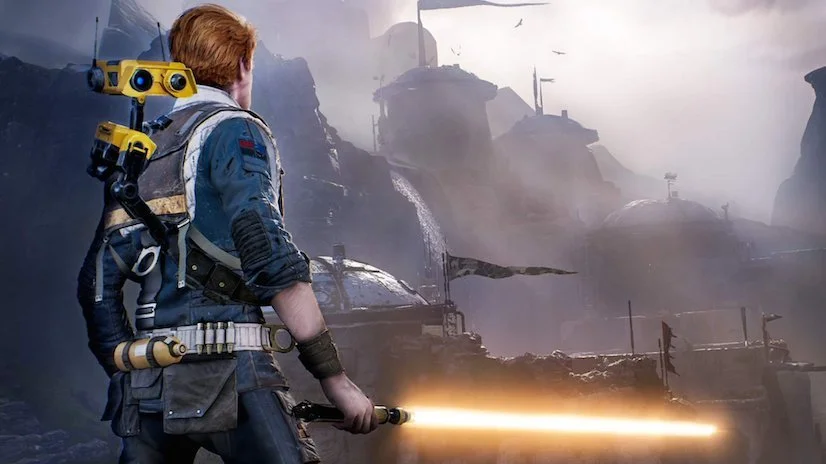
So now that we’ve walked through some of the major scenes in the game, looking at them through the lens of theme, you can see how focusing on just this one element (who Cal is) deepens the resonance of scenes already in the existing storyline. While I added a few things here and there, the story is still very close to the original game version, but the themes are more developed and the plot is tighter because each thread is connected to Cal in some way. It keeps the ending from painting their quest as an ultimately pointless MacGuffin hunt, too, because this quest has been paralleling Cal’s journey. Cordova trusted the one BD-1 chose to make the right decision, and while Cal didn’t believe he was important at all at first, his determination to live as a Jedi arrives along with his decision to destroy the holocron. Rather than feeling like the crew’s quest was a waste of time and that they would have been better off leaving the list where it was in the first place, the player can then understand this ending to be a difficult choice to protect the kids and look for a new way for the Jedi to live in the new era.
And so, writers,
I hope you’ve enjoyed a wander through this story, taking a look at how emphasizing theme can be a powerful revision tool to draw out possibilities in an existing story. Consider your own work.
Do you have themes woven throughout the story?
How is the reader introduced to the main theme?
How does the character struggle with the theme (internal plot) throughout the external plot?
How does the ending reflect the theme?
Has the character’s understanding of it changed or have they become aware of it for the first time?
Think about how you might use theme to transform your work, to see it again.
Have a story of your own that you’d like to do a deep-dive on?
A developmental edit might be just the thing your book needs. You can read about how we can help you make your book truer to itself through powerful revision on our services page.
Images from the game are property of Respawn Entertainment.
