Pinterest for Authors: Use Pinterest to Stir Your Creativity
Table of Contents Show
Whenever you create, you delve into your creative resources to shape settings, craft conversations, and perfect plots. However, no matter how boundless your imagination is, your ability to draw on your creative resources is finite. If you’re not careful about cultivating your imagination, you may find yourself resorting to generic settings, paper doll characters, or repetitive action. To keep your creative juices flowing, we’re investigating the uses of Pinterest for authors, first looking at the importance of collecting inspiration, how to expand your imaginative catalogue, and finally how to avoid falling down the rabbit hole of curation.
Do you find yourself resorting to the same suspiciously large warehouse or dark, dirty alley for action scenes? Do your characters shop at the same store?
Note: For this article, I’ll be using Pinterest as an example, but there are many other platforms that offer the same kinds of usability. You can even cut pictures out of magazines and paste them into a scrapbook!
The importance of filling your creative well
If the idea of collecting inspiration sounds strange to you, consider how many books are on your shelf right now or piling up next to your favorite chair. How many shows are you waiting for the weekend to watch? Whether you’re conscious of it or not, you are constantly gathering creative resources to replenish the stores you draw on when you create. In her book The Artist’s Way, Julia Cameron refers to this process as “filling the well.” Every time we create, we draw on our well. If we’re not careful about continually restocking that well, we dry up. This can mean creating work that resorts to shortcuts and shorthand rather than unique and well-woven elements. Pinterest is a great way for writers to fill the well because the platform makes it easy to stumble upon all kinds of inspiration.
Your creative well powers your process
Think of your creative well like art supplies, a fully equipped workbench, or even a stocked pantry. The more you have on hand, the more you’re able to combine, use, and experiment with. When you’re carefully and continuously restocking your supplies, you always have plenty on hand for whatever you want to try. On the other hand, if you’re running low, you’ll be limited in terms of what you can make.
Cultivating inspiration gives you more to work with
When you’re continually on the lookout for inspiration, you’ll collect all kinds, including some creative sparks you might not have picked up otherwise. We tend to gravitate towards what is familiar or known to us, especially when we’re tired, cautious, or busy. If we’re not careful, this is what leads to stock characters and generic descriptions. Think of this as always using the same three colored pencils or always reaching for the salt. Being intentional in your search for creative sparks ensures that you’re looking farther than usual, and you might find even more than you were looking for beyond your backyard.
Using Pinterest to expand your mental catalogue
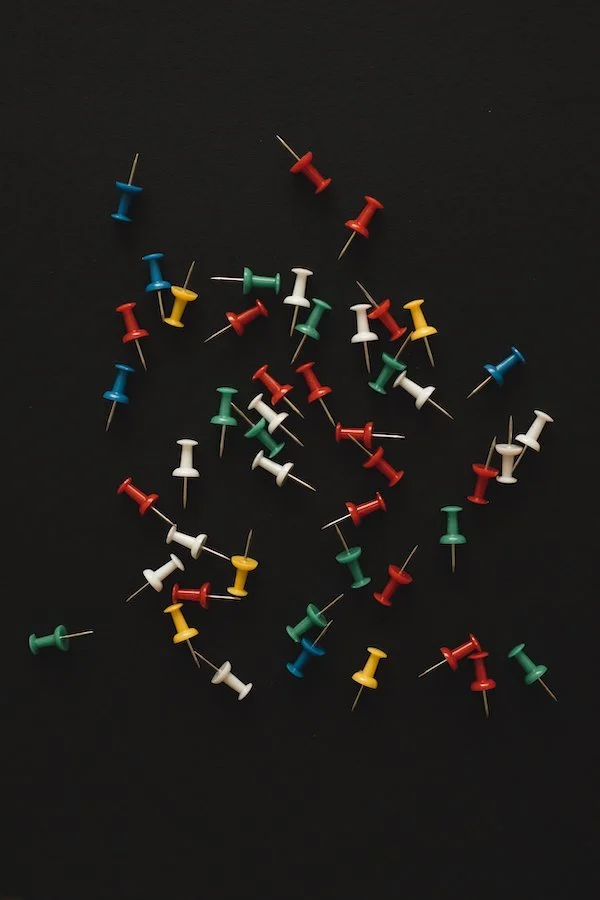
To use Pinterest for the purposes we’re discussing here, it’s important to have a basic understanding of what it is and how to use it. Pinterest is basically the world’s largest corkboard. Type what you’re interested in into the search bar, and after that, you can digitally collect just about anything from anywhere by “pinning” it. You can group pins using boards. Based on the pins you save, Pinterest recommends more pins to you, and you can even browse suggestions that are directly related to specific boards. You can make your boards public or private depending on your preferences. You can also search other people’s public boards and collections.
Because Pinterest suggests pins you might like based on what you’ve liked before, it’s a great way to stumble on related avenues of ideas. Pins range from visual concepts, advertisements, film stills, illustrations, recipes, memes, gifs, costumes, and even blocks of text. If you select a pin, Pinterest will bring up ideas related to that pin, and you can keep going from pin to pin to keep exploring.
Collecting inspiration for characters on Pinterest
The word “verisimilitude” basically means “authenticity” or “credibility,” and readers are always looking for it. Our imaginations are capable of making wonderful new things, but it’s a good idea to expand your imagination by continuously adding to your mental catalogue. This includes everything from clothing to patterns to textures to new words. Adding fresh specifics can help you avoid generic storytelling elements, too simple details, and even bland characters. Challenge yourself by interrogating your assumptions about what things look like. Do all wizards wear pointy hats? Do confident or athletic characters always wear their hair in a ponytail?
Clothing, accessories, makeup
What we wear and how we wear it is a statement. However, when it comes to writing, it’s easy to overlook clothing and opt for a forgettable wardrobe. Using Pinterest to look at clothing made by professional designers can upgrade and revolutionize not only your characters’ wardrobes but also how you see them as the author. You might discover details or types of clothing or accessories you didn’t know about before, which can add depth to your worldbuilding or characterization. Illustrations can also inspire you to move away from more generic tunics or blue jeans for your characters. You can ask yourself questions like “how can I use clothing, jewelry, or makeup for characterization?” or, put another way, “how can these elements tell readers more about my characters or the world they live in?”
Faces
Some writers know exactly what their characters look like, so much so they know the actor who’d be cast to play them in a movie. Other writers’ grasp of their characters is more fuzzy, and that can lead to fuzzy descriptions that focus on potentially less meaningful details, such as height. Collecting pictures of faces on Pinterest is a great way to expand your mental catalogue when it comes to creating and describing characters. There is such beautiful variety among people, and there is so much more to be said about someone than sharp cheekbones, a hook nose, or a strong chin. Think about how personality, attitudes, and experience so often comes through on someone’s face and how we interpret that from their features.
Collecting inspiration for settings on Pinterest
Verisimilitude also comes into play with settings, which, with the right details, can become characters all their own. You can find inspiration on Pinterest for all kinds of places you wouldn’t have thought of otherwise, especially if these are locations you haven’t personally encountered before. Pinterest can provide new and thought-provoking settings in the form of photographs and illustrations, whether it’s a well-designed room or a castle on a craggy cliff. Again, challenge your assumptions about settings. Do all courts assemble in large indoor halls made of stone? Are cars always the dominant form of transportation?
Grounded locations
If you want to convincingly write a certain kind of location, look at photographs that will help you add grounded, specific details. For example, a forest is more than just trees—depending on where it is, there could be a vast variety of types of trees, colorful mushrooms, creeks, vines, boulders, twigs, little caves, animal paths, brambles, and all kinds of other interesting additions. Say you’re trying to describe an abandoned building. Push beyond simply calling it “dilapidated” by looking at photographs of urban decay. These kinds of pictures can tell you a lot about how a building collapses, what kinds of damage occur when people aren’t living in a place, and so on.
Going beyond memory
While our memories can provide helpful catalogues for places we’re highly familiar with—such as schools, grocery stores, or offices—we’re often limited by those memories and our particular experiences in a specific version of that space. Looking at new settings, even mundane ones, can help you add in details that are often overlooked but no less important to include. Remember that specific details are better than general ones. Think about the fog that forms on the doors of the frozen food aisle, dirty cobwebs stretched over cinderblock walls, the funky abstract art in waiting rooms.
How to avoid falling down the rabbit hole of Pinterest research
As with any kind of research, it’s vital to set boundaries so you don’t lose sight of your original goal: filling your creative well. Pinterest makes it very easy to spend lots of time going from pin to pin. It constantly updates your main feed with new ideas. There are two main concepts to keep in mind when it comes to ensuring your research remains effective and beneficial: setting time limits and setting creative limits.
Setting time limits
Whenever you go on to Pinterest to look for new ideas and new inspiration, set a timer for yourself. Decide how much time you’re going to spend looking at pins and organizing your boards and stick to it. There’s no way for you to reach the end of Pinterest, but it will certainly be tempting to try!
Setting creative limits
As you bop around Pinterest, you might encounter things that are very similar to what you’re creating. You might even wonder what the point is if someone has already done it. Remember that you’re only looking for inspiration, and you can be inspired by someone else’s take on a similar idea. Don’t allow similarities to hijack your creative flow. No one has told the story you’re telling.
Pinterest for authors: Adding to your creative well
Pinterest is just one of many ways to jumpstart your creativity when it comes to filling your well. There is a whole world of ideas to be discovered, new colors and textures to be encountered. No matter where you go for inspiration and how you collect it, be sure that you’re always keeping your eyes open!
Interested in reading more about how to jump-start your creativity? Check out our two-part blog post How to Cultivate Curiosity.
Interested in working with an editor to take your writing skills to the next level?
We offer a wide variety of services custom-tailored to help you meet your goals. Whether you’re looking for in-depth feedback or a quick critique of your opening pages, we’d love to hear more about your project. You can read more on our editorial services page or get in touch.
Thanks to Behnam Norouzi on Unsplash for the delightful pushpin photo used in this post.