What Are the Differences in Types of Editing?
Table of Contents Show
Is line editing the same as proofreading? What is substantive editing?
If you’re looking to hire a book editor to help you with revisions, it’s easy to get confused by the words book editors use, terms that are often defined differently in the publishing industry. These terms for different types of editing even vary from editor to editor.

First of all, if you are at this stage, take a moment to congratulate yourself! You’ve completed a draft (or several), and now you’re taking the next big step in ensuring your story is well received by your best readers.
The next step is to figure out what kind of edit your book needs. Yet looking at all the different kinds of editing can have you wondering, Where do I even start? Each of the three main types of editing—developmental editing, line editing, copyediting—has a separate purpose and emphasis. We’ll discuss the primary features of each type, but before that, let’s return to the original question of what your book needs. Determining what kind of edit you need will ensure a positive and productive working relationship with your editor while ensuring you receive an edit you’re confident you can use—and one that makes you excited to keep working on your book.
How to figure out what kind of edit you need
The simplest way to narrow down what you need out of all the types of editing is to ask yourself three questions:
What kind of editorial feedback are you looking for?
How much revision do you want to do?
What is your budget?
These questions will help you figure out the type of edit you’re looking for as well as make sure you start off on the right foot when it comes to working with an editor. Realizing what you want and being able to communicate that to your editor guarantees everyone’s expectations for the edit are met.
What kind of editorial feedback are you looking for?
The feedback an editor gives you will largely depend on what you’re able to communicate regarding the kind of critique you’re interested in, which is another way to think about the type of editing you’re looking for. Dig into the thoughts you’ve had about your project. To get started, consider the list below.
Does the ending make sense?
I wish I knew if this book was worth spending more time on.
How do I know if my main character is interesting?
Should this be in present tense or past tense?
I don’t know what to do with commas.
I’ve never been good with grammar.
If questions 1–3 resonate with you, you’re probably looking for a big-picture edit such as a developmental edit. If you’re leaning towards questions 4–6, you might consider a grammar-focused edit such as a line edit, copyedit, or proofread.
How much revision do you want to do?
Take time to give this question a thoughtful, honest answer. Consider your writing goals. Are you ready to finish this project and get it into the hands of readers? Are you going to query agents? A more in-depth edit will require more time and energy as you work to implement the feedback you receive. On the other hand, a grammar-focused edit is more like a final polish. Think of it this way: Are you willing to take the whole engine apart, or are you doing final flight checks?
What is your budget?
Last but not least among the factors you should consider is your financial budget. Editors charge a range rates for different kinds of editing due to the amount of work involved. This means that high-level edits will cost more than those focused on grammar. Each editor sets their own rates, but you can find a lot of useful information about average industry rates online, including this chart from the Editorial Freelancers Association.
Need a more hands-on approach?
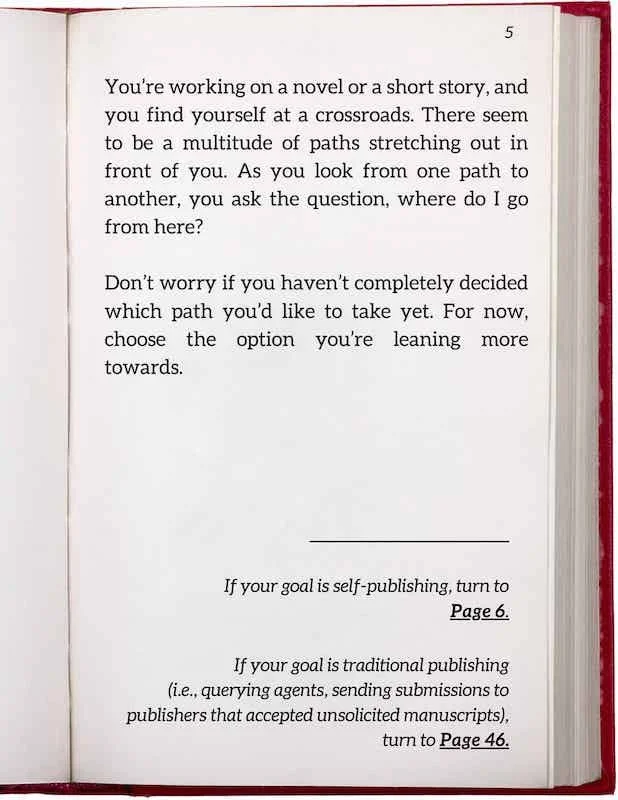
We’ve developed a free interactive guide to walk you through the process of figuring out what editorial service is the best fit.
The Types of Editing
Now that you’ve considered these three questions, we’ll discuss the different kinds of edits for books and how they can address the concerns and needs you’ve identified. Keep in mind that these definitions vary from editor to editor, but the categories are generally standard concerning what is involved with each type. I’ll be talking about these in top-down order, moving from big-picture feedback to word-level corrections. We always recommend that authors go in this order when revising their manuscripts (whether on their own or with an editor) to save time and to focus their efforts for the best results. For instance, fixing grammar before getting feedback on the story may mean spending time on revisions for parts of the manuscript that ultimately don’t make it into the final draft!
What is developmental editing?
Developmental editing (aka substantive editing) is the highest level of revision. It provides you with the most feedback by evaluating the book as a whole and analyzing character/plot development, story structure, themes, and other big-picture elements. A developmental editor’s job is to point out your book’s strengths as much as its weaknesses, offering solutions to enhance your storytelling from start to finish. This kind of edit might seem more hands off than others since the editor is usually asking questions and making comments rather than making direct changes to the text itself, but it is the most rigorous kind of edit. You’ll mostly likely receive a long editorial letter (sometimes twenty pages or more) that addresses any major concerns and provides recommendations on ways you can take your manuscript to the next level. You can read how we approach developmental editing at Ground Crew on our services page.
While this much feedback can be daunting, the purpose of developmental editing is to get to the heart of your project. Because of that, a developmental edit might require you to roll up your sleeves and make big changes such as deleting characters, moving chapters, or revising a character’s motivation. Developmental editing can be applied to a completed manuscript or a work in progress, especially if you’re stuck on the ending or need help figuring out why a particular plot point just doesn’t seem right.
Questions developmental edits can answer
What does my main character want?
Is my story interesting?
Does my book sound like something my ideal readers would read?
What themes are coming through?
Want to read more? You can read more details about developmental edits on our blog by clicking the link below.
What is a line edit?
A line edit dives into the actual words on the page. It zooms in from the big picture to the paragraph and sentence level, amplifying your writing voice and story elements while prioritizing clarity and flow. During a line edit, an editor might make suggestions for better wording or identify places where a paragraph could be expanded for greater impact, words could be trimmed from a sentence for better rhythm, or dialogue is repeated or unnecessary. Line edits may include notes about sentence structure, repetition of words, phrases, or even character actions, POV shifts, consistent characterization, and more.
A line edit uses in-line comments and edits on your manuscript to suggest changes. These edits are commonly performed using Track Changes in Microsoft Word so you can see where the editor has suggested a change. You’re then free to accept or reject those changes once the edit is complete. Some editors also provide a short letter summarizing the feedback, and some also include what’s called a style sheet, which can include reoccurring words, spellings, and common grammar fixes. This kind of edit elevates your voice, providing feedback designed to make your style as effective and engaging as possible. You can read how we approach this kind of edit at Ground Crew on our services page.
Questions line edits can answer
Is the tone consistent in my manuscript?
Do I have any scenes that are too long or repetitive?
Am I using clichéd or confusing language?
Do I have any slips in point of view (POV)?
Want to read more details about what a line edit can do for you? Find out more on our blog by clicking the link below.
What is a copyedit?
Copyediting zooms in even more to focus on sentence-level issues. Naturally, this includes the nuts and bolts of fixing grammatical errors and typos, but it also includes keeping an eye on details and other story elements that need to be consistent throughout a book.
This might look like making sure that a character’s eye color remains consistent, that a character uses words that match their age and personality, or asking if a term fits with the worldbuilding (for example, would magic users in a fantasy world use “witch” as an insult?). Copyedits are also frequently done using Track Changes in Microsoft Word with the edits being made directly on the manuscript.
Sometimes, copyediting includes manuscript formatting or the creation of style sheets/custom dictionaries. Some editors also include a short editorial letter that summarizes the changes made or common errors.
With our firm’s copyedits, we offer the option to include explanations in the manuscript for the changes so our authors can understand how the changes align the manuscript with publishing standards (following the latest edition of the Chicago Manual of Style and standard spellings according to Merriam-Webster). With that knowledge, you are empowered to either leave the changes or break the rules where you see fit! You can read how we approach this kind of edit at Ground Crew on our services page.
Questions copyedits can answer
Where do commas go?
How do I format dialogue?
Is my writing clear and easy to read?
Do my word choices keep the reader immersed in the story?
Curious to read more about the role of copy editing in perfecting your manuscript? Check out our blog post by following the link below.
A note on proofreading
Proofreading is the absolute last pass before a book is published. It’s often not included in the main types of editing because it occurs after a book has been formatted, which means it’s closer to the production side of the industry. A proofreader usually marks up PDFs (the proofs) rather than Word documents to maintain formatting that’s done in other programs. On the text side, proofreading is strictly grammar corrections and hunting for typos. A proofreader will also check that styles have been consistently applied throughout a manuscript as well (margins, header/title styles, etc.) and make sure that the finished product looks professional and is easy to read (no widows/orphans, no rivers/waterfalls in the layout of the text, etc.).
Reach out to an editor with confidence
With a working knowledge of these different levels of editing, you’ll be able to better assess what your manuscript might need as well as what level of work you’re wanting to put in. Want to roll up your sleeves and put in some elbow grease and time on your manuscript? A developmental edit may be just the thing. Want someone else to put the final polish on your book before submission? A copyedit may be just right for you.
Knowing the terms and what’s involved with each kind of editorial service will ensure you know exactly what kind of edit you’ll get when you work with an editor.
Still not sure about what you might need?
Get in touch for a complementary fifteen-minute consultation or
email us at info [at] groundcreweditorial.com. Let’s chat!
Thanks to Joanna Kosinska via Unsplash for the image!