
Why We Don’t Kill Darlings Around Here: An Editor’s Soapbox
Table of Contents Show
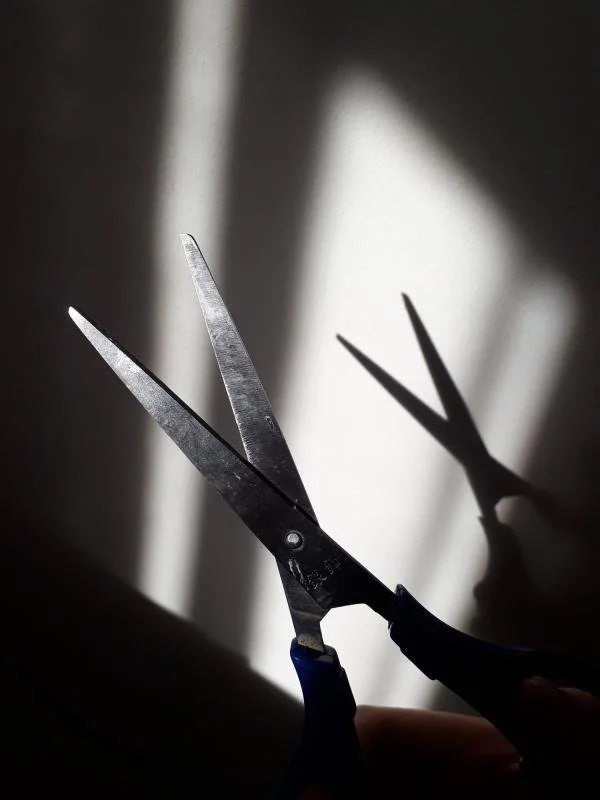
If you’ve been in the writing community any amount of time, you’ve most likely heard the advice to “Show, don’t tell.” This omnipresent piece of critique is so often repeated that it seems to have become a self-evident truth for writers, so much so that the person sharing the critique often doesn’t feel the need to elaborate on how, exactly, this should be done. Just…do it, you know? Hand in hand with “Show, don’t tell” is the much more forceful “Murder your darlings.” As a writer myself, I’ve received my fair share of critique over the years, including the encouragement to kill off darlings. However, as an editor, I never give this advice.
Where does the advice “Murder your darlings” come from?
This advice has been attributed to many authors over time, including William Faulkner, Eudora Welty, G. K. Chesterton, and even Stephen King, but the original quote comes from Arthur Quiller-Couch, a British author whose Cambridge lectures titled “On the Art of Writing” were printed and distributed widely in 1913–1914. In one of these lectures, the now-famous line appears:
If you here require a practical rule of me, I will present you with this: “Whenever you feel an impulse to perpetrate a piece of exceptionally fine writing, obey it—whole-heartedly—and delete it before sending your manuscript to press. Murder your darlings.”
Importantly, in the original context, Quiller-Couch is discussing style and warning writers to avoid “extraneous Ornament” in their writing, what we might call purple prose today. (Though I like the image of overwriting he paints, a lover presenting his beloved with a basket of jewels in order to woo her. Perhaps this could be a new way of critiquing overly flowery writing: “This paragraph here is really a basket of jewels, isn’t it?”). At first, the advice to murder your darlings was a strong admonition to avoid adding on too much detail, too many flourishes to your writing in the pursuit of “style.” It is far too easy to slip into a stuffy or insincere tone when you’re trying to dress up your writing, and as far as Quiller-Couch’s advice goes in this context, I agree that a writer’s natural voice is better.
How killing darlings became commonplace
If you’ve been told to murder your darlings, I’ll bet that it wasn’t in the context of your style but rather a scene, a plot line, or even a character. The advice to kill your darlings has expanded over time to address elements of a writer’s work that stand out (to a particular reader) as unnecessary or overly precious to the writer. That reader might feel the author has spent too much time elaborating on a plot thread that doesn’t tie in to the main storyline or that the author has enjoyed herself too much by writing a particular scene that doesn’t seem to go anywhere. If a reader senses that a part of a story is too indulgent or superfluous, they may call it a “darling.” And when giving critique, readers often highlight that sense as something that needs to be diminished or eliminated from the finished manuscript. In this way, “darling” has become shorthand for anything that draws a reader’s attention, with the understanding that attention-getting elements should be cut.
Why we never say to murder your darlings
My greatest objection to this common advice arises from the underlying assumption that I just mentioned, the assumption that anything that draws a reader’s attention too much is doing a disservice to the story. I believe that this assumption should be rooted out and tossed in the compost. Of course, we all have characters, story threads, and scenes that we adore—the joy that we find in them is a big part of why we write in the first place. And, of course, we all know that we write parts of the story that simply don’t belong in the manuscript we have. Editing is a crucial part of the storytelling process, and we shouldn’t resist making changes that will strengthen the story. But I wouldn’t call those changes “killing darlings.” At worst, this advice can lead writers to believe that anything they really love about their work shouldn’t appear in the final draft—and that’s simply a terrible idea.
Definition of a darling
What some would call “darlings” are often unique quirks in an author’s approach to storytelling or signals to the writer about what the story is really about. In the first case, we shouldn’t eliminate personal expression to pursue a generic tone or structure, to continue cultivating a sense of what “everyone else” is doing with their books. Instead, a good critique partner should help the writer see where there might be a disconnect with the reader or where the writer might need to guide the reader more to understand what they are doing. Preserving a writer’s individual form of storytelling—and helping them refine it into something readers will enjoy experiencing—is more important than smoothing off unexpected edges to fit the norm.
In the second case, darlings can be a useful flag for the writer to identify the story they really want to tell. If they’re spending more time on romantic scenes than the treasure hunt for lost relics, than that might be a sign that their real genre is romance rather than an adventure with a romantic subplot. If a certain side character is getting increasingly more screen time, perhaps that is really the main character—or the main character of a different story. So as you can see, darlings can be very useful and, in many cases, should be cultivated rather than killed.
An alternative piece of advice
Instead of “murder your darlings,” what I’m more likely to say to an author is “Choose the hill you want to die on.” It’s still suitably dramatic as a critique, but it focuses on the fact that some concessions must be made for your reader, but not all. Writing for an audience and not just yourself means that your expression is inevitably altered in some way. There are expectations, standards, and economics to consider. Writing is an art, but selling your book is business, after all. These kinds of audience considerations are extremely important if you’re pursuing traditional publication, though they are still factors with indie and self-publishing authors as well.
When I say, “Choose the hill you want to die on,” I mean that you need to be intentional about where you’re going to push the envelope. Be intentional about where you want to buck expectations. Be intentional about how you’re going to surprise your reader with something that’s out of the ordinary for them. In the spirit of this advice, remember that you can’t die on every hill. You have to prioritize. You need to know what you’re subverting and why, and you need to do it very well. When you know your intent clearly, you can revise your work until that “darling”—what a reader currently finds distracting or unnecessary—becomes an essential part of the story.
If you can’t defend a darling apart from liking it, then it shouldn’t be a hill to die on. There is most likely something else in your story that is sine qua non* (absolutely indispensable). Find it and hone it until becomes something that your readers can’t imagine the story doing without.
*Sine qua non: Latin for “without which, not.”

Ready to take the next step with your writing?
If you’re looking for trustworthy, applicable feedback on your story, we hope you’ll consider working with us. We offer a wide variety of editorial services to help writers at every stage of the process.
Thanks to Naomi O'Hare on Unsplash for the image!
