
Self Edit Checklist: Steps for Revising Your Own Book
Table of Contents Show
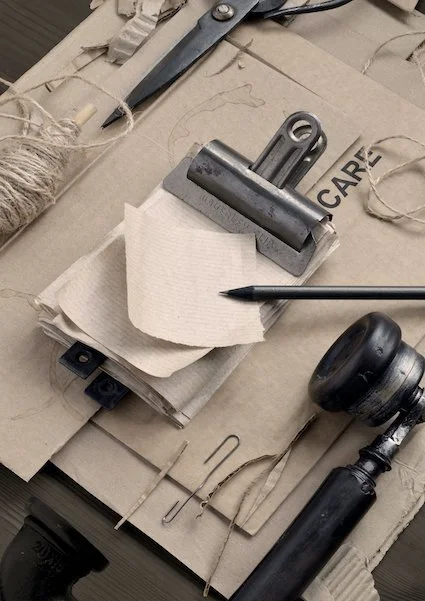
If you’ve found your way to this article, it most likely means you’ve finished a story, an essay, or some other collection of words that you intend to share with others. And that’s great—it’s no easy thing to finish a draft, so you should feel some accomplishment in reaching this point. If you’re joining us here, it also likely means that you’re looking for a self edit checklist. You’re in the right place! I’ll be briefly discussing some of the advice that I always give writers.
Step 1: Take a break
The first step on this self edit checklist is simple, no matter what you’re working on: Take a break.
That’s right. Put. The pen. Down. Close the document. Step away from the manuscript.
Writing requires energy, stamina, creativity, and, most importantly and unavoidably, time. And the time required for writing isn’t just the time you’re actually putting words together. Writing time is both active—while you’re actively creating—and dormant—while you are brainstorming/ruminating/marinating/resting. While it can feel maddening to stop working on your manuscript once you’ve reached the end, you must give yourself time away from it. Perhaps it’s because I’ve been spending more time in my garden this summer, but the image of constantly blooming flowers comes to mind. While this would be an absolutely delightful state of affairs, it simply isn’t natural. Everything living thing has cycles, including periods of dormancy to store up energy for the next season. Writers shouldn’t fall into the trap that they can constantly produce without replenishing their creative stores. Give yourself some space from your project.
How much time?
Now, how much time you give yourself depends on your own process and your project, but do give yourself a decent amount of time. Some writers say six months. Others say two weeks. If you haven’t done this before and you’re not sure, try three weeks. I can guarantee when you come back to your story, you’ll find that you’ve still been working on it, albeit in a different way.
When you’re ready to get to work again, you’ll find that you are more objective about your story. You are less emotionally involved, and you are certainly out of the weeds of intricate plot threads and subtle character development. You are able to see your work with fresh eyes, and that will help you immensely as you pick it up again.
Step 2: Read your work
Before you change a single comma in your manuscript, read it. Like giving yourself a break, this advice can feel unnecessary—I’m burnin’ daylight! Gotta make those revisions! But no matter how much you want to dive in, the truth is that you don’t really know what you have until you’ve read it after some time away. What you read after a break is the story that’s actually made it on to the page, not the story that’s been living with you for weeks, months, or years. You can’t revise a story in your mind, only what’s on the paper. Many writers working on novels have been telling their story for such a long time that it’s had multiple iterations of characters and plot lines. While it may now be a single cohesive vision to you, there may be traces of those other drafts in the work in front of you.
Read like a reader
So the advice for step two of this self edit checklist essentially boils down to this: before you start revisions, read your manuscript in its entirety. If you can, try to read it in one sitting or as close to one sitting as you can. Doing this will give you a much better idea of how other people encounter your work—that is, as a whole, not as a story created during stolen moments after the kids were put to bed, writing sprints, over lunch, and so on. It will help you see broader patterns in your work from similar scenes to repeated words, and you’ll also have a better sense of flow, pacing, and how you feel about the book as whole when you reach the end.
Approach your work like a reader before making any revisions, resisting the urge to change anything while you read. If it helps, keep a notebook or a document handy to jot notes about things that stand out to you while you read, but fight the urge to start making changes.
Step 3: Make an outline
If you’re a pantser, this advice probably chafes. As far as I know, there isn’t a fun term for writers who are a little bit of a plotter and a little bit of pantser (those who don’t make outlines or plans), but I consider myself one of these in-betweeners (a planter, perhaps?). This means I sympathize with aversion to outlines, and you can also trust that I don’t suggest this step for a lark. Outlines don’t have to be fancy, color-coded, or even all that granular. They are a great tool for you to get a handle on your story and remind yourself of the lay of the land without scrolling endlessly through your document or flipping through a ream of paper. However, an outline is only a great tool when you make it work for you. If you need colors, use colors. If you like numbers, use numbers. Notecards, charts, illustrations, flowcharts, arrows, theme and character lists, Scrivener, you name it—if it helps, use it. If it doesn’t, don’t feel pressured to use it.
Create a reverse outline
The outline that I typically recommend is one of the easiest to create and use. After you’ve read your manuscript through, go through it again to create a “reverse outline.” All this means is that you write a short sentence to describe what happens in a chapter or a scene. By the time you reach the end, you will have a rough outline that is much easier to look at than the entire text, and you will also be able to evaluate each chapter on its own. If you can, try to fit this outline on one page so you can see your whole story at a glance. I always recommend making an outline like this so you know what you’re working with. If you’re going to be making big changes, such as adding or taking out plot lines, start a new outline that reflects those changes. Your old outline will help you keep track of what the original version was and where to find those scenes in the manuscript.
Step 4: Stakes
When I’m working with writers who are getting into big revisions, 90 percent of the time, I’m talking to them about story stakes. Story stakes are essential to keep readers turning pages because they are what create interest and tension. Because this is such an important subject for writers, I’m currently working on an ebook that will be a deeper dive into it, but briefly, stakes revolve around three important questions:
What does my character want?
What’s keeping them from getting it?
What will happen if they don’t get it?
More questions to consider
Before getting into your revisions, take time to answer these questions. Having clear, definitive answers to each of these will help you evaluate each scene in the book. You can ask yourself questions like:
“Is it clear what my character wants?”
“How will a reader know what they want?”
“Do they get it by the end of the story or not?”
“Do they want something else at the conclusion?”
The second question touches on the conflict of the story, so be sure that you know the answer to it. If there’s no real conflict, there’s no real reason for a reader to keep going.
The third question is what’s truly at stake for your character. If the answer is that your character will be sad or they’ll try again another time, then you know your stakes aren’t high enough. Most stories don’t have to have the world at stake to feel important to your reader, but your character must have something vital to them (like sense of self, independence, understanding, etc.) at stake for the story to feel satisfying and interesting.
Step 5: Make a plan
If you took notes while reading, this is the time to pull those out. If you didn’t take notes, take some time to think about your impressions of your work. Did your protagonist have a clear desire? Is there a defined climax? Is the ending satisfying? Did you find that your characters seemed to have a lot of conversations on a recurring theme? Did any scenes feel like repeats of earlier action? Did you feel like you had long explanations or that you couldn’t visualize the spaces where the characters were? Did your protagonist change as a result of the story? Do you feel that the story you read captures your vision for the book? If not, why not? These are just a few things to consider.
Looking at your notes and your outline, see if you can trace any patterns. Are you noticing that there are some big-picture issues that need to be addressed? Does your protagonist need some work to be more believable? Does the plot get confusing? Are motivations unclear? Were any threads dropped?
Work big-picture to sentence level
I believe that authors know their story best—yes, better than even someone like me who has been trained in story craft and worked in words for years. Every author I’ve worked with has an intuition about their story, what’s working and what isn’t. The main difference between us is that authors are sometimes unable to pinpoint what exactly isn’t working or, if they know what the problem is, they may not know how to address it. When you’re working on revisions on your own, a helpful question to ask yourself is if this version captures your vision for the story. If the answer is “Kind of” or “Mostly” or “Sure, I guess,” then you know that something on a big-picture level is missing or not working yet. Give yourself time to work out what it might be and then make a list of the revisions you need to make.
When you’re making this list, keep in mind that you should always work from biggest to smallest. While it’s easier to tweak semicolons and spiff up verbs, you don’t want to spend time polishing sentences that may be taken out in bigger revisions. Prioritize the biggest changes (changes affecting the book as a whole or multiple scenes) first, like straightening out your plot or building out the protagonist’s character development.
Step 6: Get to work
You might be thinking that this is a lot of work before you even get to revisions, and you would be right. But the purpose of all of this prep work is to hone your vision and to strategize what you should do next. Throwing yourself at a manuscript might work for a while, but you’ll be missing the forest for the trees in no time. Strategizing will save you time and frustration, and using this self revision checklist can help you approach your revisions with purpose and direction. Keep in mind, too, that revising is just as much a part of the writing process as creating a draft. It isn’t what happens after you’ve finished writing. It is writing.
Make one change at a time
To keep yourself from getting overwhelmed or distracted, make one change at a time. For example, if you’ve decided that you need to tighten up your pacing, focus on that only as you work through the manuscript from beginning to end, shortening sentences in action-heavy scenes, trimming scenes where the reader is given information they’ve already learned, and using other techniques to improve pacing. If you notice something else you’d like to change, make a note but don’t change it right then. Keep focusing on pacing.
Step 7: Keep a growth mindset
No matter what stage of writing you find yourself in, remind yourself that you are working on your craft. Working on a craft requires time and experimentation, personal flair, discipline, and determination. Frustration, confusion, overwhelm, and restlessness are not uncommon for writers, but I say that as an encouragement. Not only are you not alone, but you can remember this: when you care deeply about what you do, it is understandably emotional and involving. The good news is that all the time you spend on your craft develops you as a writer. Unlike some other art forms where there is a peak for physical performance, writing is an art form that you develop over a lifetime. All the work you put in to a story or essay or poem builds on itself.
Every story you tell helps you tell the next one better.
Final thoughts on our self edit checklist
Most self editing checklists will give you lists of words to cut out, cliches to trim, ways to look for passive voice, and other sentence-level concerns. These can be great tools, but if you’re looking for a list of ways to do big-picture editing on your book, we hope these suggestions help you go far!
Ready to work with a professional?
When you’re ready for a fresh set of eyes on your work, we’re here for you. We offer a wide variety of editorial services from manuscript assessments to copyedits, so if you want to take the next step towards your publishing goals, we’d love to hear from you!
Thanks to Paulina Milde-Jachowska via Unsplash for the image.
