
Examples of Character Goals and Why They’re Important
Table of Contents Show
Some craft teachers and books recommend doing establishing a character’s goal on page one. But it doesn’t it seem like something as complex as the character’s goal could be fully introduced or understood that fast. After all, isn’t the unfolding and achievement of this goal the purpose of the book itself? You’d be right, which leaves us with the question of why goals are heavily prioritized and why they must be established early.
Let’s start with the very basics and give you some examples of character goals along the way.
What is a character goal?
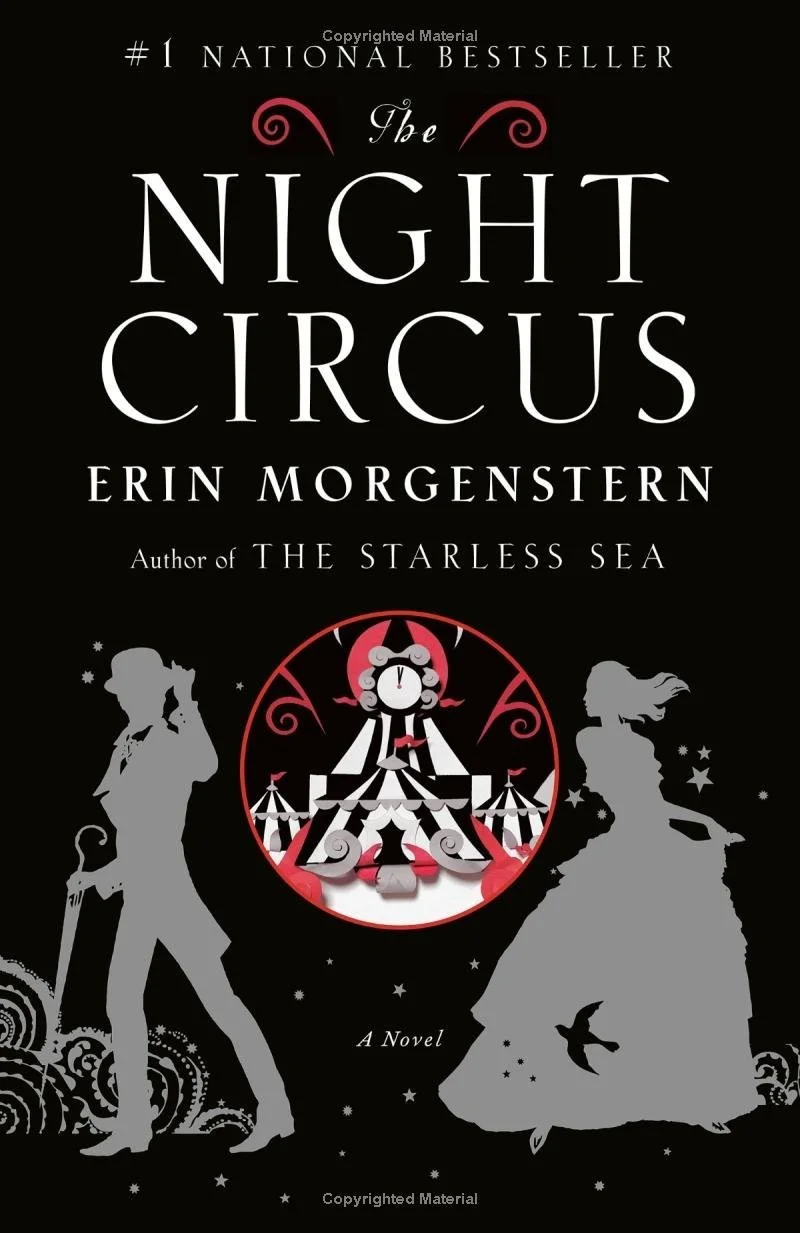
Quite simply, a goal is what the character wants. On the level of the plot, this might be winning a competition, finding true love, or simply living to the end of the day depending on what genre you’ve found yourself in. Even characters who are defined by apathy or indifference have goals, even if it’s to simply be left alone. These external goals are easy to recognize when you’re reading. In Erin Morgenstern’s The Night Circus, Celia and Marco are dueling with their magical exhibitions to prove their mentors’ superiority in the methods of magic (competition). In Nahoko Uehashi’s Moribito: Guardian of the Spirit, Balsa is hired to protect the Prince Chagum from assassins (survival). But internal goals—the roots of the story—go even deeper than this.
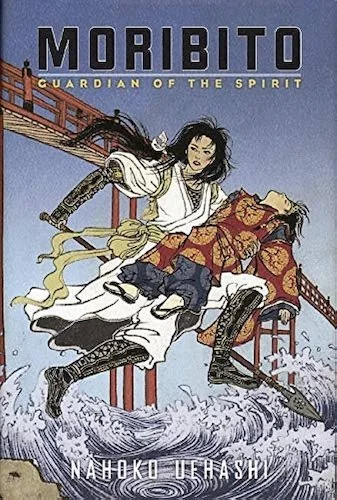
When we look closer at any goal, we can see that the external object of desire or achievement is not truly what a character really wants. What they really want is what that external object or achievement represents. Looking at the same two books, you’ll see what I mean. Celia and Marco are really pawns in the game between their masters, so while they externally want to win the game, it’s clear that both of them have been shattered by their teachers. They’ve grown up unloved and unknown, trained only as tools to prove a point. So it’s clear that winning the game means much more than an intellectual victory or duty. Winning could be a chance for their mentors to show pride in them, to be accepted, to find some identity in the magic that they perform. In Moribito, Balsa’s duty to protect the prince goes much farther than being a successful bodyguard. She wields her spear to save lives in order to atone for eight people who died to protect her when she was a child. So you can see how an external goal should always be paired with a deeper interior goal. That interior goal is what resonates with a reader in any story, and it’s what makes the external plot have tension and significance.
Why do goals need to be established early?
A character’s goal needs to be established early on in a story because of two vital elements that must be in place if a reader is going to continue turning the page:
Goals tell us who a character is
What a person wants tells us a lot about them. Wants tell us about what they value, what they prioritize, and in the process of pursuing those wants, they show us the kind of person they are. Do they overcome personal struggles to get what they want? Do they cheat? Is there any circumstance in which they’d put achieving their goal on hold? For a story to catch a reader’s interest, there must be some establishing of who the main character is, and this is deftly done by revealing something that they want. It may not be their ultimate want, but an effective character introduction can be accomplished in a small amount of time by showing the reader something they want. Why they want it (the internal goal) may not be clear at the beginning, but that builds intrigue. Consider how much we can show about a character whose story begins with her hopelessly trying to get the attention of a cute classmate for the fifth time, or another character whose story begins with him running away from home to find answers about his sister’s disappearance.
Goals make us care about the character
What really keeps anyone reading a story is interest in the characters, curiosity about what they’ll do, what might happen later. Even in plot-driven narratives, characters are the ones moving through the action. If the reader doesn’t care what happens to anyone, then there is little tension to make them keep turning the page. If we know what a character wants, we begin to care about their journey and what happens to them. If we know what they want, then we are frustrated along with them when they encounter obstacles, and we understand the setbacks and failures. Goals build empathy with a character because while we may not share the same external goals (like surviving the Hunger Games), we resonate with desires to be loved, to discover identity, to prove our inner strength to ourselves, to go to new places, and so on. That makes us care.
Complexity and development of character goals
Lastly, keep in mind that the goal that a character begins with is not necessarily the one that they end with. Goals can change, but they should be a natural extension of the character. As a character grows, their own understanding of what they want changes. This is usually reflected in the outward goal. What they want internally typically does not change—how they will get it might change. To go back to The Night Circus, when Celia and Marco are forced to plumb their own depths for ever more wondrous displays of magic, they are ultimately drawn together and find that they are known and loved by the other. Winning the game between magicians no longer matters because they found what they were actually looking for. What they wanted didn’t change (acceptance, identity, love), but how they achieved it was not winning the competition. So when you’re thinking of how to introduce a character’s goal in the beginning of your story, think about what the deeper goal is and how you might show hints of that deeper motivation, not necessarily the external conflict of the larger story.
For a deeper dive into how character goals impact audiences, read on for a case study on the anime Jujutsu Kaisen.
A case study: Jujutsu Kaisen
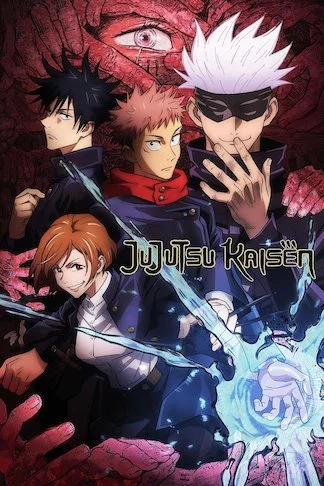
As a writer, I’m constantly taking in stories in all forms, and that includes movies, TV shows, and video games—there is so much to enjoy! While storytelling in a visual medium doesn’t use exactly the same toolbox that writers do when crafting short stories or novels, there is a lot that we can learn from stories in any form. TV shows in particular offer some useful perspectives on beginning a story—after all, they have to catch the viewer’s attention in a short amount of time, introduce the main character, set up the problem, and offer the promise of the story that will unfold, just like the beginning of a written story should. The second season of the anime Jujutsu Kaisen has been recently airing, and I thought I’d return to the first few episodes as a good case study for talking about goals.
While the manga of this series has been serialized in Shonen Jump since 2018, it was introduced to a wider international audience through the anime adaptation that began in October 2020. It follows Yuji Itadori, a high schooler who’s thrown into the dangerous world of cursed spirits, beings manifested from the negative emotions of humans. Shortly after his grandfather’s death, Yuji meets Megumi Fushiguro, who tries to save some of Yuji’s classmates from a cursed object attracting a dangerous spirit. Yuji learns that the spirit is determined to eat the cursed object to gain its power, and he decides to eat it instead (yes, you read that right). Surprisingly, Yuji is not killed—rather, he is possessed by the spirit of the object, Sukuna, one of the most powerful cursed spirits in history that was broken into pieces. Through this, Yuji’s rough introduction to the world of jujutsu sorcery begins.
Because he is able to act as a vessel for Sukuna, he is sentenced to execution by jujutsu sorcerers, people like Megumi who fight against the cursed spirits, but this execution is temporarily stayed until Yuji locates the rest of the pieces so they can be destroyed. Instead, he becomes the third first-year student at Jujutsu High.
The buzz—Is something missing?
While I’m usually years behind the curve with popular shows, I’m always interested in hearing the discussions going on in the communities. When the first season was airing for English audiences, Jujutsu Kaisen got a lot of credit for challenging some stereotypes about shonen anime and the portrayal of female characters in particular, but I encountered several people also talking about having trouble relating to the characters well or understanding their motivations. Naturally, you’ll find that you don’t connect with every story—that is why there are so many stories in the world. They all speak to us differently, and it’s not always the author’s intent to create a character-driven story. But I was curious about this reaction, particularly because I’d felt similarly while watching the first few episodes—and, admittedly, this show touches on more horror elements than I usually engage with, so that was also a hurdle. I watched the first few and then walked away from it for a few weeks, only coming back after I’d read a little more about it. So after picking it up again and hearing that others also had trouble relating to the characters, I considered why that might be.

There’s a case to be made that Jujutsu Kaisen lacks a strongly established goal for the characters at the beginning, and that weakens the resonance that viewers feel. To be fair, one goal is stated quite clearly in the first episode. Yuji is given a quite explicit mandate from his grandfather to help others, and he discovers the concept that “everyone deserves a proper death.” His desire to help others is evident and admirable—stepping up without hesitation to help his friends and Megumi is a heroic trait. However, his goal is ambiguous—help everyone? And what counts as help? And ensuring a proper death is not something that the average person has control over, so it doesn’t resonate as a goal. It’s only after Yuji gets his new powers that the goal takes on meaning.
Interestingly, the principal of Jujutsu High almost immediately challenges Yuji’s goal to help others as a result of his grandfather’s dying wish, saying that he’d only be fighting for someone else’s desires. Under pressure, Yuji eventually tells him that he has to stop Sukuna so that he can live without regrets. However, this, too, does not resonate as a strong goal with the viewer yet because it’s still a form of a goal that someone else puts upon him. After all, Yuji will only be alive as long as he’s useful to defeat Sukuna. We’re still wondering what he wants, which means we don’t know him well and have a hard time relating to him, especially since we’re not likely to experience his set of circumstances. Remember, we’re talking about the deeper goal here. Even if the external goal is clear, like stopping an evil cursed spirit, if we don’t know what the main character wants, engagement and interest is lowered.
Beyond the main character
The cast of core characters all struggle with these unclear goals at the beginning. Megumi and the other first year, Nobara Kugisaki, are already pretty skilled jujutsu sorcerers, but their personal goals are not evident. Like Yuji, they have definite goals reacting in the moment—to win the fight, to finish the mission, but why are they jujutsu sorcerers in the first place? Later, it seems that Megumi didn’t have a choice but to be one, having been born into a special family line, and Nobara was desperate to leave her small country town, but their internal goals are murky. We don’t know what they want or who they are very well. Some of this is by design—serialized stories are told differently than novels, of course—but there should be some hint of an underlying goal at the beginning. By contrast, one of the most defined characters is Maki Zenin, whose character goal has made her very popular with fans. Despite being born without cursed energy (a non-sorcerer), she is determined to become a sorcerer nonetheless to stick it to her family, who mistreated her and worked against her for her lack of ability. The stark contrast of her determination with the relatively unknown motivations of the main trio gives her much more definition and interest. Her goal is so inspiring that even Nobara is compelled to tell Maki how much she admires her!
Need more examples of character goals?
Jujutsu Kaisen does several things well, and the series mostly likely unfolds over time to reveal deeper character motivations, but for viewers unwilling to wait, there is not enough at the beginning to tell them who these characters are and to encourage them go along for the ride—and writers who don’t work in visual media don’t have the advantage of interesting character designs or impressive fight choreography!
To find your own examples of character goals that are working or missing, take a look at books that you’ve read or shows that you’ve watched recently. For the ones that drew you in, think about what the creator did to introduce you to the main characters and what you learned about their goals at the start. Even more telling can be the ones that didn’t catch your attention right away. If you put a book down or changed over to a different show, think about what was missing. Did you feel like the characters were boring or unrelatable? What could you tell about who they were or what they wanted?

Want to talk shop about your own story?
We’d love to hear about what you’re working on. We offer a wide variety of editorial services custom tailored to help you take your book to the next level and resonate with your readers.
