
How to Figure Out Which Story Ideas Belong in Your Book
Table of Contents Show
As writers, one of our best skills is making stuff up. Coming up with story ideas is practically the job description. The dark side of this is that sometimes we end up with too many ideas, and if we’re not careful, we can end up snowed under in a blizzard of what-ifs or marooned on an island in a sea of possibilities. When this happens, it can be hard to make heads or tails out of what’s in front of us—Should this character be in the story? Does this subplot belong here? What about this backstory? What about this interesting magic spell or this romance?
If you find yourself in this predicament, there are a few ways you can get a more objective perspective on your work and identify what fits in your current story and what doesn’t. I’ll pose each one as a question that you can ask yourself as you go along.

What boundaries or rules have I set?
If you’re feeling like you’re having a hard time choosing ideas for a project because they all seem equally good or possible, take some time to think about the boundaries of the story you’re telling. If it helps, you can also think of these as rules. These are decisions that you’ve made about how the story works. Sometimes, these are decisions that you’ve made unconsciously, and now is the time to bring them into the light and put words around them. Here are a few examples of what rules can look like:
· This character is constantly on the defensive because she is a human living among vampires.
· Only people in a certain family can use this rare type of magic.
· Adults are more susceptible to mind-control than kids.
Once you’ve considered what some of your rules are, you can ask, Does this story idea work with those rules?
At first glance, these rules might not look terribly useful for sorting ideas, but if we look closer, we can see that these rules contain certain possibilities for these stories, allowing certain ideas and blocking off others.
· A human living among vampires—someone who has grown up knowing that she is prey—is always on high alert. This means that all of her relationships are fraught with fear and distrust. Unless she is forced in some way, she will not seek out others for help, she will not be able to make friends easily (nor want them), and she will not fall instantly in love. Her relationships should be hard-won and difficult. Because of this, it is only fitting that even the one seemingly stable relationship with her adopted father is shattered during the events of the story. (From Carissa Broadbent’s The Serpent and the Wings of Night)


· If there is a type of magic that is limited to only one family in a fantasy world, we expect that there is considerable pressure on members of that family to perform it, and they may also be singled out as targets by those who wish to prevent the use of that magic or who wish to destroy it completely. A character with this magic is not usually free to choose their own path in life, nor do they have an option to simply sit things out or hide. Family bonds in a story with inherited magic are very important, so a character motivated by finding a missing parent, as well as stepping into her role as potentially the last in her line, fits very well. (From Garth Nix’s Sabriel)
· If kids have more immunity from mind-control, this means that adults in the story will have to keep their distance from the villain. The adults can only help the main characters in very limited ways, and they can’t swoop in and save the day. There are definite challenges, but the problems of the plot have to remain kid-sized. Achieving their goals should never require them to have the capabilities of adults because it is precisely their kid-ness that makes them valuable to begin with. (From Trenton Lee Stewart’s The Mysterious Benedict Society)

It’s not necessary to write out all the rules of your story, but putting language around some of the concepts that are central to the story—the foundational ideas—can help you see what fits and what doesn’t when you’re thinking about subplots and characters.
On the flip side, if you find that you haven’t made any hard-and-fast rules, this might be a factor in your indecisiveness when it comes to choosing what belongs in the story. At some point, you have to put a frame around your story so you know what to focus on. If the rules can change at any time, so can the story.
What are my themes?
Writers who have worked with us know that we always end up talking about theme sooner or later. While not all writers use theme to inspire or organize their work, I always suggest it as a tool for writers to consider adding to their toolkit. Theme, like boundaries/rules, can provide a useful framework for evaluating whether or not an idea belongs in a story. Stories with strong cohesiveness and deep resonance are layered with explorations of the same theme. This doesn’t mean that the story is saying the same thing over and over again—the theme can be developed or complicated by elements like a character’s storyline or a specific story beat.
For example, let’s say that you’re working on a story where you want one of your themes to be something like Friendship will help you grow. This theme could be illustrated in an infinite variety of ways, such as a character having come out of their shell to make new friends, taking up a new hobby they really enjoy because of a friend’s interest, fighting with a friend and coming to a new understanding of what they prioritize, and even dealing with the ending of a friendship. Having lots of scenes where your protagonist is on their own would work against this theme, so you’d want to be careful about having too many moments where the plot only moves forward or the main character’s emotional development only happens when they are alone. By way of contrast, you could use another character to illustrate the opposite of this theme, someone who has not grown as the result of a meaningful friendship or someone who has a very different definition of what friendship is (such as only making friends for personal advantage).
Theme can be a very useful tool to see if a storyline or a scene actually fits into the vision that you have for the story. Remember, you’re not limited to one theme in a story, but to use this tool most effectively, try to express your theme as a sentence rather than a single word or phrase.
Can I connect this idea with another thread in the book?
If you’re not inclined toward theme as a writer or you’re not quite sure yet what your themes are, you can still evaluate ideas by focusing on connections between ideas. Ask yourself if you can draw a connection between this idea and something else in the story. Has something like this happened before? Has another character done something similar? You can think of this as cohesion or mirroring. Let’s say you’re thinking about a character who’s struggling with self-esteem and anxiety. It would be natural to introduce a character who has no problem making themselves heard, who confidently strides into every situation. If you wanted to go further, it might become clear that their confidence is a façade, that they feel just as insecure as our main character does, or perhaps they used to be anxious but found a way to conquer their fears. This would be an example of mirroring—these characters show different facets of the same issue.
One of my favorite examples of this, if you’ll allow me a non-book example, comes from Avatar: The Last Airbender. Though it is a story with an ensemble cast with characters who have very different goals and motivations, it is a very cohesive story. Despite many different storylines woven together, it still feels like one story altogether. This is because each of the main characters is dealing with the same problem, albeit in their own ways. Each one is dealing with figuring out who they are:
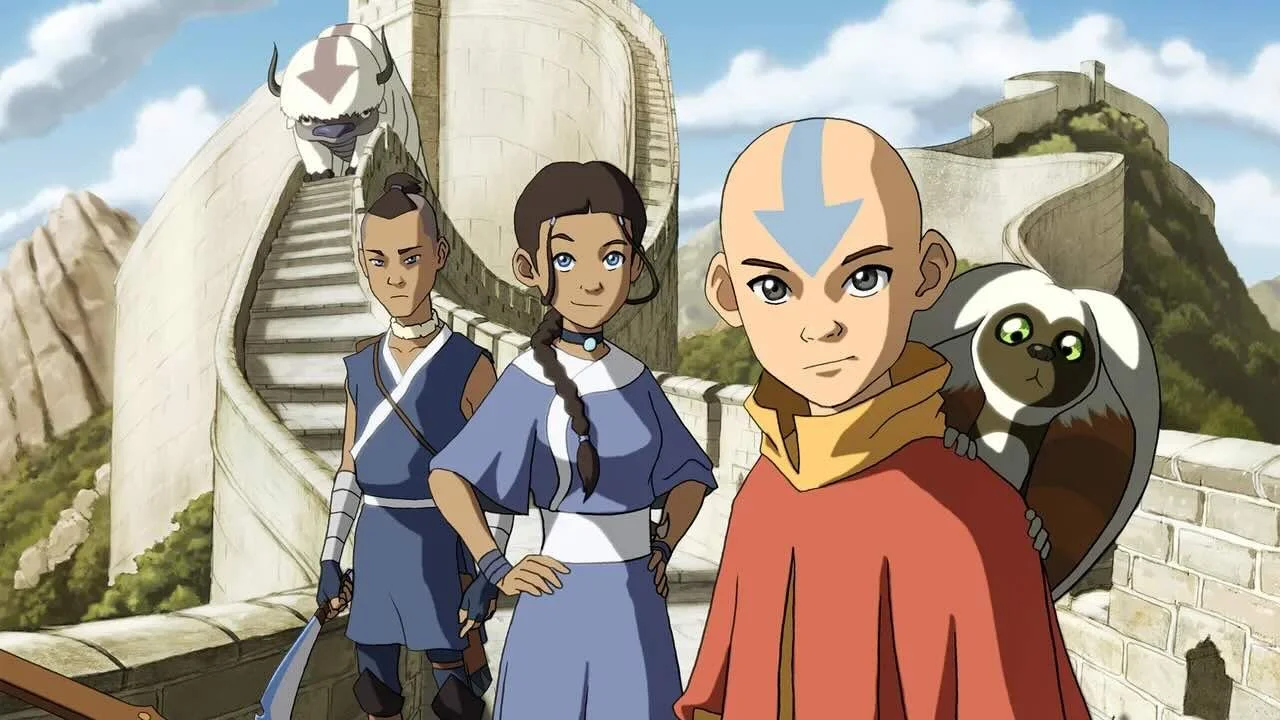
Aang is the Avatar, but he didn’t want to be the Avatar and ran away. Now, he has to decide if he’s going to take up that role. He’s also the only airbender left.
Katara is the only waterbender in her tribe, which makes her an outsider in a certain sense. Her brother, Sokka, doesn’t think it’s important, and there’s no one who can teach her how to use her special ability.
Sokka is the only warrior left in their village, all the men having gone to fight in the war. Later, he’s also the only one in the main ensemble of characters who doesn’t have bending abilities of any kind, which creates some friction of its own as he tries to figure out what he can do that no one else can.
Toph is the only daughter of a wealthy family who wants to keep her sheltered because she is blind. As an earthbender, however, she can not only see but fight—but she’s been hiding this from her parents. When her parents find out, they reject this version of her and restrict her freedom even more. She runs away to join Aang and the others.
Even the antagonist, Zuko, is wrestling with the same thing. He thinks that capturing the Avatar will restore his honor and his place in his family, but as time goes by, his sense of self is challenged again and again. He’s put everything he is into capturing Aang, but if he can’t—or he decides to do something else—who is he?
If you can link an idea or character to another element in the story, it may be a useful one to keep (even better if it connects to more than one!). If it doesn’t connect, it might not belong in the story, or it may be that it isn’t quite in the right form yet.
Does this idea foreshadow further developments in the story?
Lastly, when you’re looking at whether or not an idea fits in your story, you can think about the purpose it serves in the book as a whole, and, if you’re working on a series, the series as a whole. Does your idea lead to something bigger down the road? For instance, readers learn that Harry Potter can talk to snakes in the first book. This takes on much greater significance later on, but in the first installment, it seems almost like a tossed in detail. Whether you’re working with one book or a series, it’s important to plant ideas early on to foreshadow or hint at things to come so that readers, sometimes even only subconsciously, will anticipate them. As an example, if you’re focusing on just one book, you can ask, does this idea build towards the climax of the story in some way, such as giving important backstory or context that there’s no time to share later on?
With a series, some of these ideas can be gifts that you give yourself, opportunities that you don’t know quite what you’ll do with now but will later bloom into plot twists, settings, or new characters. The key is that each one should ultimately have a function in the story. Narrow in on the ideas that serve a definite purpose in the story in front of you.
Sifting ideas
These are just a few ways to evaluate ideas when you’re struggling to determine if an idea belongs in the story that you’re working on. Each of these questions is meant to help you get a more objective perspective on your work, to help you step a little farther away from the emotional side of creating that sometimes makes it hard to set aside ideas that we’ve already poured time into. An objective stance can also help you avoid the pitfall of the thrill of a new idea, which can automatically seem like the best idea simply because it’s not the one we’ve been kicking around for months.
Whatever strategy you use to sift your ideas, remember that having too many ideas can be a good problem to have, and that whatever you don’t use for this story can always appear in another!
