
Poetic Techniques for Inspiration and Brainstorming
Table of Contents Show

This is the conclusion to a miniseries I’ve put together about using poetic techniques and devices in your writing (not just poetry!). If you’re curious about parts one and two, you can find them by clicking on the links!
The elements that I’ve talked about previously—alliteration, onomatopoeia, zeugma, etc.—are like lemon zest. These are sentence-level spices to liven up your prose, introduce melody and cadence to your writing, as well as personality. What I’ll be discussing in this article are poetic devices that can also be used on the sentence-level as well, but they can serve as inspiration for big-picture story elements like organization or structure in a story.
Puns
Play on words, using multiple meanings or similar sounds to make a joke
These can be phrases like “Father, Son, and Holy Toast” that subvert your expectations. Puns get a hard rap in English these days. Usually the response to a good pun is a groan, but it’s really a shame. They are totally fun, and it actually takes a great grasp of language to use them. They used to be a more respectable form of wit, and maybe that’ll come back some day. (I study Japanese when I’m not editing, writing, or reading in English, and I find it gratifying that there is a large appreciation for puns in the language, so the common disdain for “dad jokes” must just be an English thing at the moment.)
Puns for story inspiration or structure
Thankfully, puns are largely embraced in kid lit. Picture books can really make the most out of this because they can show the puns visually, not just in text, and this can be a lot of fun for kids learning the language. Just a few that rely on puns are Tara Lazar’s 7 Ate 9 and the Astronuts series by Jon Scieszka. See also Natasha Wing’s story called Bagel in Love, where Bagel is looking for a dance partner for a contest, but is having trouble. Croissant thinks his moves are stale, and Doughnut’s eyes just glaze over. Greg Barrington’s story Cow Boy is NOT a Cowboy uses wordplay in the title itself.


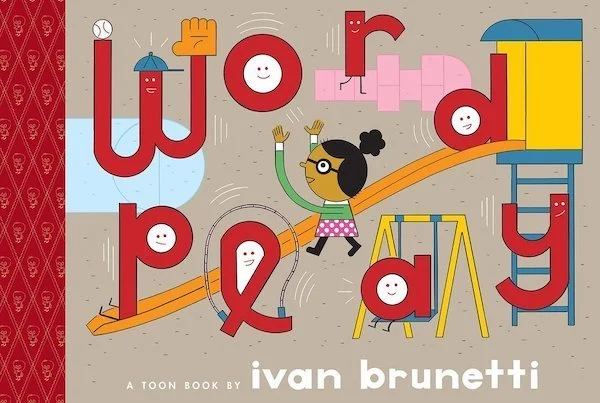
The most thorough example of this is Ivan Brunetti’s book Wordplay. In this story, the students are learning compound words and drawing pictures to go with them. They’re a little different than what you’d expect. A “housefly” is drawn as a house with wings. In books like these, the puns are the structure of the book itself, and in many of them, you can see how the plot is entirely progressed one pun at a time. This is one way to use a poetic device not only for brainstorming, but also to guide you in writing the story itself.
Can novelists use puns?
Naturally, novelists can use puns, too. While puns aren’t usually used for worldbuilding, there are some standout exceptions. Just read Norton Juster’s The Phantom Tollbooth to see what I mean, where Conclusions is an island you can jump to. Puns sprinkled into prose are a delight if they match the tone of your story or for character voices. Any Terry Pratchett readers here? He’s a master of this. Here’s a quote from one of his YA books, The Wee Free Men: “A little way away, where the river bank became a sort of pebble beach, her brother Wentworth was messing around with a stick, and almost certainly making himself sticky.” Same word, two meanings.
Also from Terry Pratchett, there is a saying that appears in every one of his books: “a leopard can’t change its shorts.” Just a nice twist on the expected phrase. Even if you’re not a picture book writer, think about how you can use wordplay to generate ideas or even world building elements.
Puns for character inspiration
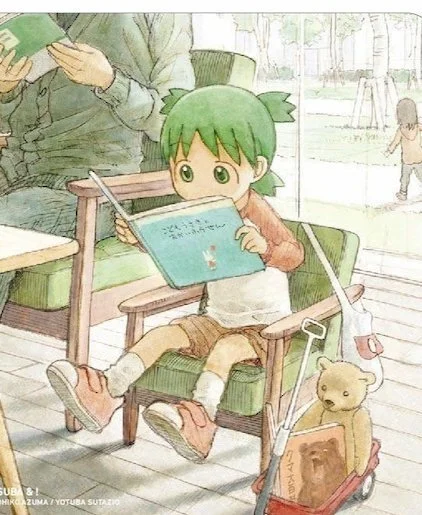
You might also consider punning on character names as well. Many Japanese series do this, but if you get into the etymology of names, you can often find inspiration for your story or even your illustrations. Yotsuba is the titular character of Azuma Kiyohiko’s Yotsuba&!, a manga series I enjoy. Her name means “four-leaf clover,” which, when you look at her, isn’t so surprising—four green pigtails. So her name inspired part of her character design (or, in the case of an artist, most likely the other way around). But it also is a reflection of her role in the series. Wherever she goes, she is unexpected, but she brings happiness. Whatever situation she is in, good comes from it. So using wordplay to generate story inspiration from your character’s name might be something to think about when choosing names for your next protagonist.
Repetition
a literary device that involves intentionally using a word or phrase for effect two or more times
I think of repetition as the cinnamon of poetic techniques. Most of us are pretty comfortable with the usual cinnamon. We dash it on oatmeal, put a pinch of it in for breads or pies, but did you know that there are actually four main kinds of cinnamon? And each one has different taste. Repetition has a lot to offer that often goes unexplored.
Repetition as structure in picture books
Joanna Ho’s Eyes that Kiss in the Corners, which I’ve referred to previously in the other poetic device articles, is a stellar example of the many ways that repetition can be used. Let's take a look.

The phrase “eyes that kiss in the corners and glow like warm tea” repeated again and again with exact repetition. Repetition links each woman in the family: “my eyes are just like Mama’s,” and her eyes “are just like Amah’s,” and hers are “just like Mei-Mei’s.” This creates a thread that runs throughout the entire book. And once the reader gets to the little sister, they see “Mei-Mei’s eyes that kiss in the corners and glow like warm tea are just like mine.” See the circle? We begin and end in the same place. At the end of the book, they read: “They are Mama and Amah and Mei-Mei.” This is the same pattern as the story.
But repetition isn’t just words. It can be ideas too. If you take a look at the part about her mom and compare it to her description of her grandmother, there are some images that are the same, such as the eyes crinkling into crescent moons and sparkling like stars and having “flecks of gold.” But the second part is a little different. “Oolong pools” and stories were her grandmother. So there is repetition in the images, though the words are different.
In this book, it’s very obvious that the repetition is the backbone of the story. There is an order that is never broken, and the repetition gives this concept book—one that is really quite simple—unity and beauty.
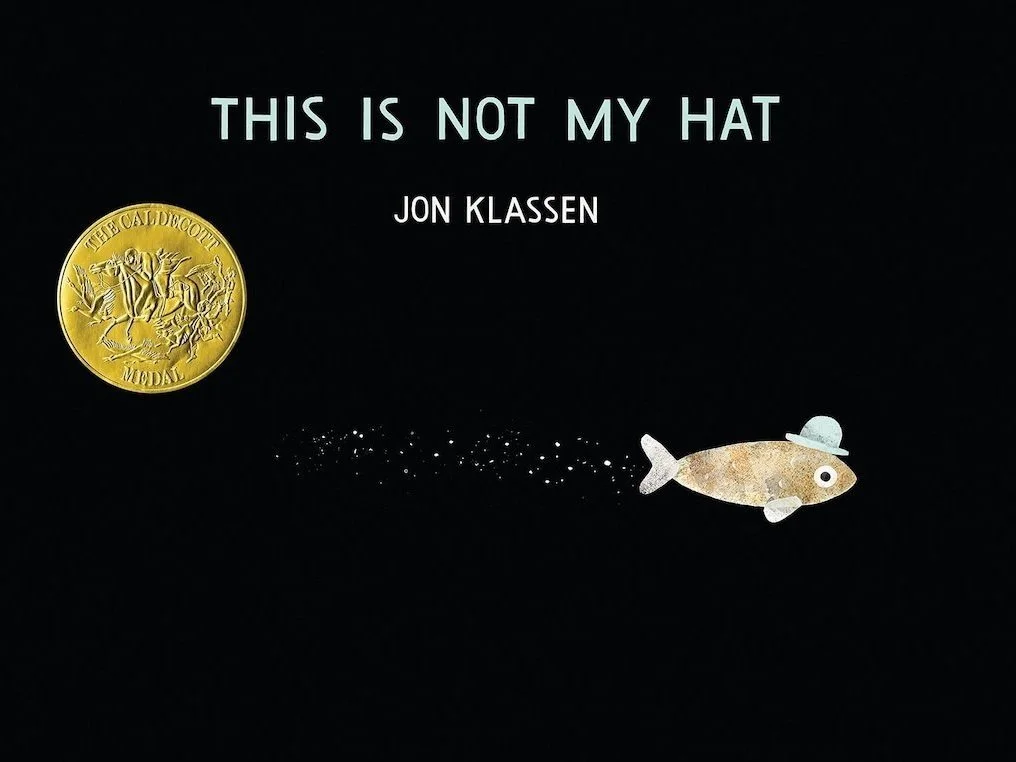
Jon Klassen’s book This is Not My Hat also uses repetition as a structure, building off of the previous action. For example, saying that a fish won’t wake up, “but even if he does wake up…” and that he won’t notice that the hat is gone, “but even if he does notice that it’s gone…”
Just when you think you know how the story is going to go, he changes it. This coincides with the rising tension in the illustrations (the fish is being followed by the much larger, angrier fish who wants his hat back). We’ve gotten used to the “even if” pattern. But then “even if he does guess it was me, he won't know where I’m going” is abruptly followed by “But I will tell you where I am going.” The break in repetition tells us there is a change in the story.
Repetition in novels
So you can see for picture books how repetition can be structure for the story. In longer works like novels, repetition usually looks like motifs—images, times of day, colors, or dialogue that is repeated throughout. In YA, Maggie Stiefvater’s Raven Cycle series, the sentence “Come get me” appears in each of the four books, spoken by each one of the four main characters. The setting is different each time, but the repetition builds cohesiveness, echoes the theme of the series, and builds meaning on itself. So for novel-length works, think about things can repeat and how they can add complexity to your story.
Could it be a location that the characters return to?
And what would it mean if it’s the same place but something is different when they come back?
Could it be a feeling that comes up again and again? Is there a character who always wears the same color?
Is there a phrase that a character always says?
Other forms of repetition
These last two devices that I’m going to talk about are forms of repetition. You have probably used them, but now you’ll know their names—something you can always whip out of your pocket at parties.
Anaphora
repetition of a word or expression at the beginning of clauses or sentences
This word comes from the Greek, “to carry up or back.” Anaphora is very common in song lyrics, but many famous lines in literature are anaphora as well. They are easy to remember because of the repetition, and that’s partly what’s given them their staying power. Think of Winston Churchill’s speech—“we shall fight in France, we shall fight on the seas and oceans, we shall fight with growing confidence and growing strength in the air, we shall defend our island, whatever the cost may be, we shall fight on the beaches…” This same technique is used to wonderful effect in Martin Luther King, Jr.’s famous “I Have a Dream” speech.
Epistrophe
repetition of words at the end of a sentence or clause
The word comes from a Greek word meaning “turning upon,” and you can see how it indicates that word or phrase returns at the end of each line.
Here is a well-known quote from Aragorn in the movie The Return of the King: “ A day may come when the courage of men fails, when we forsake our friends and break all bonds of fellowship, but it is not this day. An hour of woes and shattered shields, when the age of men comes crashing down! But it is not this day! This day we fight!”
Both anaphora and epistrophe can be used by writers to amplify emotion and emphasize an idea. Experiment with them in your current project!
Poetic techniques: In conclusion
While this discussion of poetic devices concludes here, these articles are meant to give you a small taste of the different kinds of poetic techniques available to all writers and a few suggestions for how they can be used to great effect in everything from single sentences to story ideas. There are many more devices than I’ve gone over, and each of these deserves much more in-depth discussion, but I hope that you’ll be inspired to try sprinkling a few into your writing. Enjoy!
The beautiful header image is courtesy of Marion Botella.
