
Poetic Devices with Examples: Alliteration to Zeugma
Table of Contents Show

The other spices in the cabinet: Adding flavor to your writing
In the previous post, I talked about the basic rhythm in writing. Now that we’ve got that foundation, we can move on to talk about a few other poetic devices that you can use to add flavor to your writing just like spices add flavor to a dish or bake. First, I'll talk about sentence-level poetic devices with examples.
These are:
alliteration
consonance
assonance
onomatopoeia
zeugma
Alliteration
Words close together that have the same first consonant sound
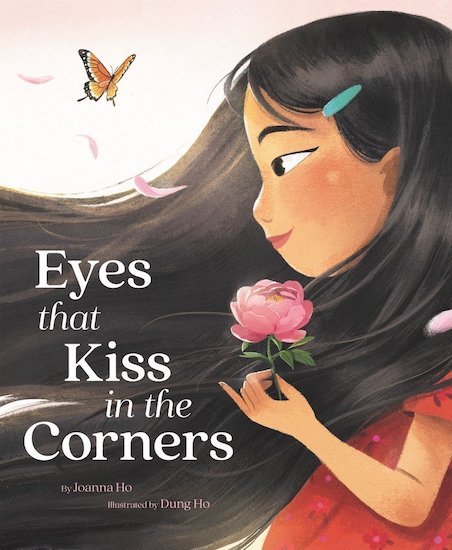
The name comes from the Latin word latira, meaning “letters of the alphabet.” Alliteration is plentiful in kid lit because it is fun to listen to and to read. Our first example (and many others for this post) comes from Joanna Ho’s book, Eyes that Kiss in the Corners. “Kiss” and “corners” are a great example of alliteration. Remember, it’s just the same sound that’s repeated, not necessarily the same letters, as with this k and c. On the first page of the story, we read
“Some people have
eyes like sapphire lagoons
with lashes like lace trim on ballgowns
sweeping their cheeks as they twirl.
Big eyes, long lashes.
Not me.”
We see several examples right off the bat:
lashes like lace trim.
Long lashes.
Some, sapphire, and sweeping.
Alliteration is the easiest one to notice and to work into your writing. For picture book writers, it’s a great element to consider for reading aloud, and when used in longer prose, it can be a way to add humor, emphasis, or even elegance. Similar sounding words are pleasing to ear, and they can lend a depth to otherwise common descriptions. Let’s move on to consonance.
Consonance
Repetition of specific consonant sounds in close proximity
Have you heard the term “imperfect” or slant rhyme? Consonance is an example of this. This can be a little more difficult to spot and to include than alliteration.
An example from William Blake
Let’s look at a famous poem by William Blake:
Tyger, tyger, burning bright / in the forests of the night;
What immortal hand or eye / could frame thy fearful symmetry?
Look at the repetition of r sounds throughout these four lines: tyger, burning, bright, forests, immortal, frame, fearful, symmetry.
These repeated sounds link the words together through sound, and it’s most likely an intentional choice from the poet to feature a growling r sound in a poem that addresses a tiger.
Now take a look at the t sounds: tyger, bright, forests, night, immortal, symmetry.
The hard t sound also works to link these words together, not to mention adding points of emphasis for the lines. In the first couplet, the hard t creates a rhythm like a steady drum—try reading this out loud, enunciating the t when you come to it:
Tyger, tyger, burning bright / in the forests of the night
The t is less noticeable in the second couplet, but these lines still remain strongly linked because of the repeated consonant sounds, and the rhythm falls on the hard t again in “symmetry” (remember, too, that this would have been read “sim-uh-try” not “sim-uh-tree” and thus getting in that rhyme). This continuity is enjoyable to read and “hear,” even if you’re reading silently, and the repeated sounds also tighten the connection between ideas and images.
An example from Joanna Ho
Going back to Eyes that Kiss in the Corners, let’s take a look at more words that appear together on a page:
“Mama’s eyes that kiss in the corners and glow like warm tea
crinkle into crescent moons
when she comes home from work.
She scoops me in her arms,
eyes sparkling like starlight,
and tickles me
until we laugh ourselves onto the floor.”
Take a look at the hard c and k sounds: kiss, corners, crinkle, crescent, comes, work, scoops, sparkling, and tickles
And then the repeated t sounds: that, tea, crescent, starlight, and tickles
On the following page, the author makes excellent use of repeated s sounds to evoke a cozy mood, like nighttime whispers: tucks, eyes, moments, she’s, flecks, and hers. Think of what kind of mood you’d like to introduce into a scene and use word sounds to help the reader better experience what they’re reading.
Assonance
Repetition of vowel sounds across words
If you’ve ever gotten assonance and consonance mixed up, it’s because these two are essentially the same technique but with different sounds. Consonance uses consonant sounds while assonance uses vowel sounds. Like the previous technique, assonance is also a kind of internal or slant rhyme.
Let’s go back to that same page we looked at before, only now taking a look at vowels: kiss, in, into, in, sparkling, tickles.
What others do you see? Notice:
glow and home
moon and scoops
tea, crinkle, she, me, we
Assonance can be a little more difficult to identify because it’s often more subtle—nothing as noticeable as the hard t we were just discussing in Blake’s poem. However, this technique adds a satisfying unity to a sentence or paragraph, and when used deftly, it can add a smoothness and flow to your prose. Pay attention to both assonance and consonance in your writing to link your words together by sound and further immerse your reader in your words.
Onomatopoeia
A word formed by an imitation of a sound made by or associated with the thing that it refers to
The best recently published picture book I’ve found that uses this to great effect is Cathy Camper’s book Ten Ways to Hear Snow. As you might guess, the sounds feature prominently, like great words to describe footsteps in the snow—“snyuk, snyek, snyak”—and “plompf” for snow falling off of a branch. These are a little more obvious since they’re described sounds in the story. But consider the first lines of the book: “No cars honked. No buses chugged. No garbage trucks gulped trash across the street.” Hear how active those simple sentences sound? “Honked,” “chugged,” and “gulped” are also onomatopoeia.
Onomatopoeia is often a technique associated with children’s books, but its use shouldn’t be limited to just picture books! It’s perfect for adding more vivid sounds and actions in your prose, especially when you want to get away from quiet and overused verbs like “look,” “walk,” and “see.” Of the five senses, sight dominates in writing, so intentionally using onomatopoeia can help you incorporate more sound in a natural way. It’s also a stellar way to sprinkle in humor and give more voice to your prose.
Zeugma
A word in a sentence used once while conveying two different meanings at the same time
Pronounced “zoog-ma,” this word comes from the Greek for “yoking” or “bonding.” For example, “Here Thou, great Anna! whom three Realms obey, Dost sometimes Counsel take—and sometimes Tea” (from Alexander Pope’s The Rape of the Lock, Canto III).
Jane Austen gives us another example: “Yet time and her aunt moved slowly...”
This is often used in humor because the second one is often unexpected. But it doesn’t always have to be. It can also be a deft way to condense time in a scene, as we see in J.R.R. Tolkien’s The Fellowship of the Ring: “Then she brought the cup to each of the Company, and bade them drink and farewell.” It can also skillfully link two concepts together, as you can see in this more modern example: “You are free to execute your laws, and your citizens, as you see fit” (from episode “Angel One,” Star Trek, The Next Generation).
Even more poetic devices with examples
These techniques that I’ve just talked about are like lemon zest or bit a cardamom sprinkled in for flavor. But don’t let the metaphor of spices fool you—these devices are not frilly extras or afterthoughts for your writing. These are fundamental sentence-level elements of writing craft to liven up your prose and introduce melody and cadence to your writing. In short, poetic devices are important tools for you to use to capture unique personalities and your writing voice. They are always at your disposal for creating moods, sentences readers want to get lost in, distilling feelings and ideas that are difficult to describe, and more.
In the next blog, I’ll talk about the poetic devices that can be sentence-level as well but that can also be used for big-picture organization or structure in a story—or even brainstorming for story ideas!
Did you miss part one? Read it here.
The beautiful header image for this post comes from Christina Rumpf via Unsplash.
